Tuesday, September 22, 2015

We Are Headed For Another Government Shutdown and It Could Be Costly


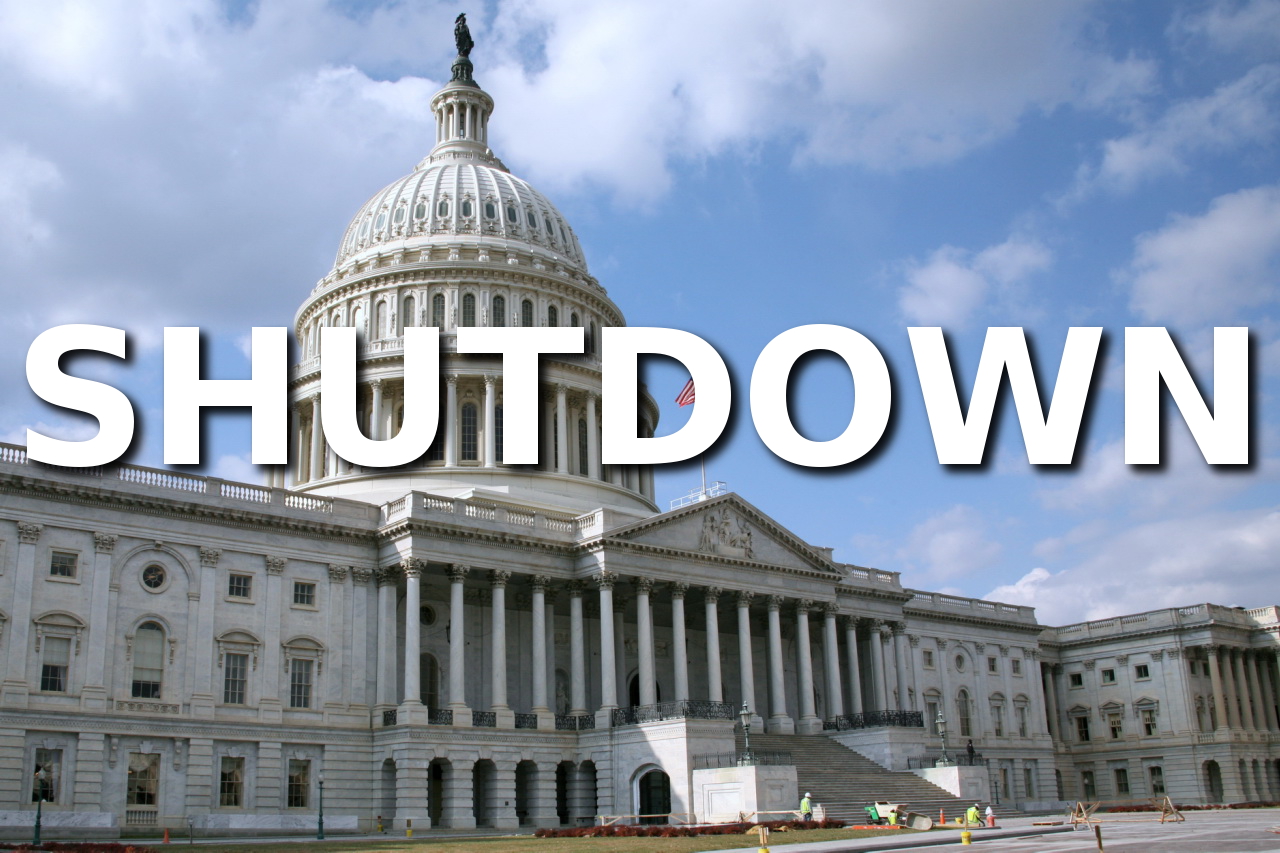
The Senate is expected to vote this week toward avoiding a government shutdown on October 1. With little support coming from the House though, it is likely we will see the government shutdown next week. The only real hope is a coalition of moderate Republicans and Democrats working together to pass something this week.

Congressional Republicans are holding up the continuing funding resolution due to a debate over funding Planned Parenthood. This began with videos which showed Planned Parenthood officials discussing payment for procuring aborted baby tissue. These videos have caused an uproar among conservative members of the house and they have been weighing whether to try to strip federal funding for the nation's largest provider of abortions in a spending bill that must be passed before the government’s current funding expires on September 30.

A government shutdown results in non essential portions of the government being shut down. Vital portions would stay intact such as the USPS, Department of  Defense, Social Security, Medicare and Medicaid.

Most of the government actually isn't affected at all, and often even those who are still have workers performing their job functions.The shutdown, saw roughly 800,000 federal employees sent home and national parks and services closed.  Most of these employees however continued work from home on their projects unpaid until the shutdown ends. They were then given back pay for this time period.

The 16-day shutdown in 2013 also stopped the creation of an estimated 120,000 new jobs, according to one report by the Council of Economic Advisers. It dug into the GDP for that year by over 24 billion dollars. Considering the instability in China's markets and with several countries around the world, this is not the time for the government to be causing any decline in economic output.

Until recently, Senate Republicans had indicated they would likely wait to see what kind of spending bill would be passed by the House, where there is greater GOP opposition to any spending measure that includes Planned Parenthood funding. Since the House is only in session for a short time this week and has no such measure on it's calendar the Senate looks to be attempting to act first.

“It’s an exercise in futility," Senate Majority Leader Mitch McConnell said in an interview with Politico. "I’m anxious to defund Planned Parenthood" but "the honest answer of that is that’s not going to happen until you have a president who has a similar view."

This comes as presidential hopeful Senator Ted Cruz has stated his opposition to any bill allowing Planned Parenthood funding. "In light of recent and horrific revelations that Planned Parenthood is trafficking in fetal tissue and body parts from abortions, we urge you not to schedule or facilitate the consideration of any legislation that authorizes or appropriates federal dollars for Planned Parenthood."

Last month he also stated, "I believe we should use every and any procedural tool available to defund Planned Parenthood."

Other Senators have criticized Ted Cruz for his views on a government shutdown. "Given the challenges and threats we face at home and abroad, I oppose risking a government shutdown, particularly when it appears there is no chance of achieving a successful result. Nevertheless, as I understand it, you have been circulating a letter to our colleagues asking them to oppose any government funding bill that continues to authorize funding for Planned Parenthood. … How do we get 60 votes? And if for some reason there were 60 votes, how do we get 67 votes in the Senate to overcome a Presidential veto?” Senator Kelly Ayotte asked in a recent letter. “During the last government shutdown, I repeatedly asked you what your strategy for success was when we did not have the votes to achieve the goal of defunding Obamacare, but I did not receive an answer."

With fears of the economic effects a shutdown could have, industry leaders are calling for compromise. "A democracy is a compromise by its nature. It’s not a dictatorship. So anyone who says, “my way or the highway on one issue,” isn’t necessarily thinking about the United States of America. And so I wish people to overcome that kind of stuff. A government shutdown is just bad management."JP Morgan Chase’s CEO Jamie Dimon said in a recent interview with MSNBC.

Many Americans view it as that; failed leadership by both parties that is leading to a shutdown. A lack of compromise lead the last Congress to be the least effective in history. There is a strong belief that the extremism we are seeing in Congress, displayed in the house especially is directly linked to the gerrymandering of districts throughout the country by both parties. This gerrymandering guarantees seats and power at the cost of extremism. This has lead to the rise of the Tea Party and concerns over the debt ceiling being raised and government shutdowns.


With less than 9 days to go before a possible shut down, it is becoming more and more likely that Congress will not be able to pass a funding bill in time. Democrats are unlikely to back down, and President Obama has already promised he will veto any bill that defunds Planned Parenthood. Some have argued that it was not the founders intent to use the veto as a partisan tool, but rather as a constitutional safe guard against abuse. Others point that this authority has been used in this manner for decades.  Needless to say, if this shutdown lasts longer than the one in 2013 (16 days), it could become very costly to our economy and our government.


Friday, September 18, 2015

Politics 101: How Do Presidential Primaries Work?

 This edition in our continuing series of short articles helping our readers understand how certain things work in U.S. Politics covers how presidential primaries work.

As you may not have noticed, we now have 17  candidates for the Republican nomination for president. The Democrats have 6 likely candidates, but for most they assume Hilary Clinton will be the nominee. I encourage you to visit realclearpolitics.com to see the latest polling and information on both  nominations. I also encourage people to use the site ISideWith.com to help see where they match up with candidates on the issues.

Starting early next year the democrat and republican parties will be holding primaries or caucuses in each state to determine who will be the nominee for their party. Now, officially you are selecting delegates for your party from your state during the caucus/primary who will go to the party's national convention. Normally, however there are enough delegates which go to one candidate that the nomination is settled far before the national convention.

You may be wondering what the difference between a primary and a caucus is. In presidential nomination campaigns, a caucus is a system of local gatherings where voters decide which candidate to support and select delegates for nominating conventions. Often these gatherings will be very noisy and can last for hours. People will make cases for their candidates and try to sway voters. Eventually a system of voting commences but it is not secret ballot, your vote is known. Some caucuses will have those who support a candidate stand all together and count the numbers from each group.

A primary is a statewide voting process in which voters cast secret ballots for their preferred candidates similar to how we vote for most candidates in a general election. In most states the candidate with the most votes receives all the delegates from that state, however some states will divide them based upon percentage of votes received.

If you aren't bored out of your scull think of it this way. You're in a huge high school, you might not know everyone there so how do people decide on who should be the Homecoming king. Each classroom is given a vote on who they think should be Homecoming King. Since this is such a massive high school though, instead you decide to pick a few people from each class who really like the person they nominate. They then go to the gym and a vote is held. They aren't forced to vote for that person, but it is very likely that they will.

There are also a few other delegates as well who are deemed super delegates. These are party elders such as sitting members of Congress, former presidents and such. They make up approximately 20% of all delegates at the convention. This is to ensure the party's platform represents core values of the party.

Because of the schedule and the general momentum a front-runner gains, normally only the first month and a half of primaries really matter. This means that states like California, with it's massive population will  have little impact on the nomination, and most likely the nomination will be considered settled before it even reaches Ohio in March. Officially the nominee is determined by a candidate receiving a majority of delegates votes at the convention. However when a candidate receives a majority of delegates from the states they then become the presumptive nominee.

What does this mean? In almost every case for last half a century, it means that a candidate who enters the race late, or doesn't gain enough national attention or support by February 1st has little to no chance to win the nomination.

Certain states have firm laws on their primary dates. New Hampshire's law states that their primary must be the first in the nation. Iowa's caucus is always the first caucus in the nation. These first states have a massive impact on the nomination process. There are many who don't agree with the amount of power this affords these two states in comparison to the rest of the country in deciding the future of the country.

If you are still confused this video does a good job of explaining it:


The schedule for primaries and caucuses in 2016 for each state are as follows:
Monday, February 1 Iowa caucus
Tuesday, February 9 New Hampshire
Saturday, February 20 South Carolina
Tuesday, February 23 Nevada caucus
Tuesday, March 1(Also known as Super Tuesday) Alabama Arkansas Colorado caucuses Georgia Massachusetts Minnesota caucuses North Carolina Oklahoma Tennessee Texas Vermont Virginia
Saturday, March 5 Louisiana Nebraska (Dem caucus)
Tuesday, March 8 Hawaii caucus (GOP) Mississippi Michigan
Sunday, March 13 Puerto Rico (GOP)
Tuesday, March 15 Ohio Florida Illinois Missouri
Tuesday, March 22 Arizona Utah
Saturday, March 26 Hawaii caucus (Dems)
Tuesday, April 5 Wisconsin
Tuesday, April 26 Connecticut Delaware Maryland Pennsylvania Rhode Island
Tuesday, May 3 Indiana
Tuesday, May 10 Nebraska (GOP primary) West Virginia
Tuesday, May 17 KentuckyOregon
Sunday, June 5 Puerto Rico (Dem)
Tuesday, June 7 California Montana New Jersey New Mexico South Dakota
Tuesday, June 14 Washington, DC
States with no firm dates:
New York North Dakota Utah Colorado Idaho Kansas Maine Washington Wyoming


Wednesday, September 16, 2015

Who Won the Second Debate? Vote Here!

The debate is over, who do you think won the debate? Vote for who you think won the debate and comment with who you think lost the debate.

Don't forget to like us on facebook and follow us on twitter!


Who won the debate?

Chris Christie
Carly Fiorina
Rand Paul
John Kasich
Marco Rubio
Jeb Bush
Donald Trump
Mike Huckabee
Ben Carson
Ted Cruz
Scott Walker
Poll Maker

Tuesday, September 15, 2015

10 Questions That Should Be Asked at the Next Republican Presidential Debate

Source:Flickr

The second Republican Presidential debate is Wednesday night 8 PM ET on CNN. The last debate afforded each candidate only a few minutes to answer questions.  With the large group of candidates we have, we probably won't be able to see each of these questions answered by each candidate, but I have outlined 10 questions that I wish I could hear each candidate answer.

Under each question I have outlined several other points that need to be addressed, and possible follow up questions for the candidates. Often our debates stop focusing on the issues and start to be shows of entertainment and popularity. We should try to focus on what matters most in our country. I have tried to base my questions on that ideal-that the debates should be about substance not delivery.

1.What is your plan to address immigration reform?
-Some candidates should be asked about their plans such as Trump, whose plan has been deemed by many as unrealistic at best.
-Others support plans to allow illegals to stay, how do they defend that to people who are unemployed or taxpayers who pay at least part of the bill?
-If you are opposed to deportation how do you justify all of the money spent on illegals (education, healthcare and benefits to children etc.)?
-How do you justify it when so many are still out of work?
-How do you plan to secure the border?

2. How do you plan to decrease the deficit and balance the budget?
-What are the  specifics of their plans, some candidates are supporting tax cuts without specifying what they will cut to offset those tax cuts.
-Do you support increasing taxes in any way?
-What do you think about a national sales tax?

3. Do you support or oppose the Iran nuclear deal?
-As commander and chief if you oppose it will you commit to use of military force in Iran?
-If you support it, what would you do if Iran is found cheating on the plan?
-With evidence showing Iranian support of Isis how do you justify supporting the deal?

4. Do you support defunding planned parenthood?
-How would you address those who are concerned about the loss of women's health clinics?
-If you don't support defunding, how will you address the federal government giving half a billion dollars a year to the biggest provider of abortions in our country?

5. The U.S. infrastructure has received a D rating. How would you address our failing infrastructure?
-Some estimates estimate we need to spend hundreds of billions of dollars right now just to bring our infrastructure up to date, including 60,000 bridges which are in need of immediate repair or replacement how will you fund this?
-In what ways will you bring our infrastructure into the 21st century?

6. What are your plans to reform education?
-If you are opposed or support common core how do you think national education should be handled?
-Do you support a national curriculum?
-What are your plans to push our nation forward in education?

7. Do you support legalizing less harmful drugs like marijuana?
-The war on drugs has been costly, how would you address those who say that the war on drugs has failed?
-How do you justify continuing to imprison people for having very small amounts of marijuana on them.
-Do you support drug courts where a person gets treatment instead of going to jail?
-If they support legalization, how do you justify legalizing drugs which can have negative impacts on the brain?
-Do you support more research for DUI testing methods like breathalyzers for marijuana?


8. What is your plan to strengthen our economy?
-Many believe regulations are crippling our economy, as president what regulations would you change?
-Many are concerned about the affects income inequality is having on our country, with wealth increasingly going to the richest 1%. How do you address these concerns as president?
-Consumer debt has almost equaled our national debt, how would you address the growing concerns over the massive amount of debt which is becoming a drag on our economy, especially student loan debt?


9. How will you bring people together to move America forward? Great leaders are measured by what they have done working through compromise to accomplish. We have had too much extremism and not enough listening and compromise.
-What would you do to work across the aisle?
-How have you worked across the aisle to get things done?
-How would you work to mend the wounds within our nation?


10. The next president will inherit 3 massive trade deals the TPP, TTIP and TISA. Would trade negotiations change under your presidency?
-How would you address our growing trade deficit?
-How would you use trade to move our nation forward in the years to come?

What would you like to see asked in the debate? Comment with your question below.

Friday, September 11, 2015

Why I'll Never Forget That Day #NeverForget911


I was a sophomore in high school. I was in English class taking a quiz. Another teacher popped their head in the room and our teacher went to the door. All I heard was "and they've evacuated the white house." I knew something was wrong, but I had never imagined this.

Today marks the 14th anniversary of 9/11/2001, a date which will live in infamy. As I exited my class and entered the cafeteria TV's were tuned to a local station which showed live coverage of the aftermath of two planes crashing into the world trade towers. Shortly after the next period began, I remember my Principal, Jim McCann spoke over the speakers announcing what was known.

During my lunch hour I stared in shock as the first tower fell. I had never been to New York City. I had never seen these towers with my own eyes, but I knew that my country had been attacked in an unforgiving manner. The events of the day proceeded, all flights were grounded and the nation mourned an unknown number of lives that they knew were lost. Early estimates had the number as high as five or six thousand lives lost.

I stared in disbelief for hours as I returned home at news coverage. I was angry I was shocked, and I was in mourning. Over the next few days, weeks and months details emerged of the heroes and the villains of this attack. We learned of the police and firefighters who risked it all just to save one more life. We learned of the many who didn't make it out. The fathers and mothers, the sons and daughters. These innocent victims of a brutal terrorist attack on two symbols of our nation's prosperity.

Years have passed, and each year we are reminded on this day of that terrible attack on our nation's soil. I'll never forget what that day meant, and how I changed. The years have done little to fade my memory. This event has and will continue to shape our history as a nation, and our views on the world. We must not forget that day, or the lessons we have heard.


Comment with why you'll never forget 9/11

Thursday, September 10, 2015

10 Things You Should Know About U.S. Politics.

Image source: Flickr
Many people tell me they hate politics for one reason or another. They tell me they hate all of the fighting, all of the lies, how long it takes for things to happen, or all of the drama. I was born to talk politics. I've loved it all of my life, and I've followed every election closely since I was a young child. Most people are not me. I studied political science, worked on the hill, and I've worked in the political field ever since. Politics is in my blood. So I love talking politics, but not everyone does.

Even with people who like to talk politics it doesn't mean we're having great conversations. When we talk politics we often assume that the people across from us are as politically informed as we are. Sometimes they are more sometimes they are less. All of us could probably do with upping our political IQ, Hopefully it isn't as bad as the people who appeared in this video from Jimmy Kimmel live. None of the individuals interviewed were able to identify any member of Congress.


So I thought through what are 10 things you should know about U.S. politics as a citizen even if you don't really want to get too involved.
1. You should know the basics of how our federal government works. This includes the branches of government, checks and balances, who has the power to make law, implement and review it.

2. You should know who represents you in Congress. Can you name your representative, and two senators? If you don't feel free to go here to find out.

3. You should know who the leaders of the country are. You should at least know who the President, Vice President, Speaker of the House and Senate Majority leader are. A few other good ones to know are the minority leaders, the Secretaries of State and Defense, and the Supreme Court Justices.

4. You should know who the Governor of your state is. It's also good to know your local leaders and try to be involved at the local level because you have the opportunity to have far more of an impact on the local level than the national level.

5. You should know before an election where candidates stand on the issues compared to you. I recommend the site isidewith.com

6. You should know what the federal budget looks like. Every spending decision that is made affects the budget, every tax cut or increase affects the budget. When people talk of spending on military, welfare etc. it's important to know what those budgets look like.

7. You need to know that your participation in society and in politics matters. The more that people are involved in society the better their income, health, and happiness. The more people are involved in politics and government especially in their community, the more ability we have to accomplish great things and move the nation forward. In fact there is a direct correlation between civic engagement and many of our problems as a country. People have lower drop out rates, lower crime rates and better healthcare as a whole. Unemployment drops and incomes rise.

8. You should know that no one has all of the answers. Listening to the other sides' opinions is just as important as listening to your own side. If you start hearing a major push for one opinion on an issue you may want to take a step back, do some research on your own and figure out both sides.

9. No one disagrees on everything. All of us have shared common ground. Even Ted Cruz, Hillary Clinton and Bernie Sanders have common ground. We need to recognize that more and not get caught up in the things that tear us apart.

10. Lastly you should know that your vote matters. Here's a good list of times where just one vote mattered.


Tuesday, September 8, 2015

Why the Minimum Wage Debate Isn't as Simple As it Seems

Image source:Flickr

For several years now we have seen slow but steady employment growth. While that trend tends to mean we have a strong economy a concern still lingers as wages have lagged behind, increasing at rates lower than inflation. Some have suggested specifically to help those who are in poverty, we should raise the minimum wage which currently stands at $7.25/hr.

It seems simple doesn't it? Just force employers to pay people more. Right now labor groups and liberals across the country have called for at least a $10.10/hr minimum wage. Polling consistently shows that across the spectrum there is wide support for raising the minimum wage.

Others like Senator Bernie Sanders a leading candidate for the Democratic Nomination for president. have called for upwards of $15/hr, their argument states that if today's minimum wage kept up with worker productivity it would be over $21.72/hr.

In a press release introducing his bill to raise the federal minimum wage to $15 an hour Senator Sanders said "Increasing the minimum wage would directly benefit 62 million workers who currently make less than $15 an hour, including over half of African-American workers and close to 60 percent of Latino workers.  If the minimum wage had kept up with productivity and inflation since 1968, it would be more than $26 an hour today."

It is true that if the minimum wage from the 1960's had kept up with inflation, the minimum wage would be $10.52, but the 1960's was the highest point (inflation adjusted) for the minimum wage.

Opponents of the minimum wage like Senator Ted Cruz, also a presidential candidate have said that the real cost in the minimum wage is lost jobs. That in order to increase wages we need to focus on increasing the number of high tech manufacturing and energy jobs.

“Those who are being hurt the most in the Obama economy are the most vulnerable among us – young people, Hispanics, African-Americans and single moms,” Sen. Cruz said. “They are the ones paying the price for the great stagnation in which we find ourselves. The undeniable truth is if the president succeeded in raising the minimum wage, it would cost jobs from the most vulnerable.”

“The discussion before this chamber is whether to raise the minimum wage to $10.10 an hour,” Sen. Cruz continued. “But, even if it passed, the real Obama minimum wage is zero dollars and zero cents. Far better than the promise of $10.10 an hour, is $46.98 – the wage Americans can earn in the oil and gas industry. We ought to come together with bipartisan unanimity to say we will stand with the American people to bring millions of jobs, raise median income and make it easier for people who are struggling to achieve the American Dream. We should all come together and vote on the American Energy Renaissance Act, to remove government barriers and open up new federal lands and resources to develop high-paying, promising jobs that expand opportunity.”

A few facts first, only about 3 percent of those who work are working for the federal minimum wage. Many states have set higher minimum wages than the federal one. A very small percentage of those are supporting a family with that income.

So why don't we raise the national minimum wage? Wages have stagnated which has limited the growth of our economy and has weakened the middle class. Why not raise it to $50 an hour and give the vast majority of Americans a raise? There are several reasons opponents to increasing the minimum wage give for not increasing it.

According to the Heritage foundation, here are several quick facts about the minimum wage:

  • Studies find raising the minimum wage does not reduce poverty.[1] It is a completely ineffective anti-poverty policy.
  • The primary value of minimum-wage jobs is that they are learning jobs. They teach inexperienced employees basic employment skills that make them more productive and enable them to earn raises or move to better jobs.
  • Over half of all Americans started their careers making within $1 of the minimum wage.[2] Few stayed there long.
  • Two-thirds of minimum-wage workers earn raises within a year—without the government’s help.[3]
  • Correctly adjusted for inflation, the minimum wage currently stands above its historical average since 1950.[4]
  • The minimum wage hike sponsored by some Members of Congress and supported by President Obama would raise the minimum wage to an unprecedented level—one-seventh above its inflation-adjusted all-time high.[5]
  • This would cause employers to reduce hiring, leaving fewer people employed.[6] Macroeconomic modeling shows the proposed minimum wage increase would eliminate 300,000 jobs.[7] That means fewer opportunities for unskilled workers to get started in the labor market and move their way up.
  • When businesses have to pay higher wages, businesses hire higher-skill workers, freezing the least productive, most disadvantaged workers out of the job market.[8][9] Consequently minimum wage hikes harm the very people that proponents of the laws most want to help.
  • Primarily Affects Younger Workers Without Family Responsibilities
  • Only 2.9 percent of wage earners earn the federal minimum wage.[10][11][12]
  • Most minimum-wage earners are teenagers or young adults, not heads of families.
  • Over half of minimum-wage earners are between the ages of 16 and 24.[13]
  • Two-thirds work part time (defined as less than 35 hours a week).[14]
  • The average family income of a minimum-wage worker is $53,000 a year, less than the national average of $79,500 a year but well above the poverty level.[15]
  • Two-thirds of minimum-wage workers live in families with incomes above 150 percent of the poverty line.[16]
  • Just 4 percent of minimum-wage workers are single parents working full time, compared to 5.6 percent of all U.S. workers.[17]
  • The Obamacare employer mandate is already scheduled to raise the cost of hiring less-skilled workers. When the mandate takes effect in 2015 the minimum cost of hiring a full-time worker will rise to $10.30 an hour. That includes the minimum wage, employer payroll taxes, and the employer mandate.[18]
  • From the employer’s perspective the cost of hiring workers has increased, but the additional money goes to the government instead of the employees.[19]
  • The proposed minimum wage increase of $10.10 an hour would bring the minimum cost of hiring a full-time worker—including the Obamacare penalties—to $12.71 an hour.[20]

On the other side the White House in a press release stated the following:
"The Economic Case for Raising the Minimum Wage from White House

The inflation-adjusted value of the minimum wage has fallen by more than a third from its peak and is currently about twenty percent less than it was when President Ronald Reagan first took office in 1981. The minimum wage helps support family incomes, reducing inequality and poverty—especially for female earners. But as the real value of the minimum wage been allowed to erode, it has stopped serving this important purpose. The minimum wage is now just 36 percent of the average wage and trending lower, as those at the low end of the income distribution are in increasing danger of being left behind while the economic recovery continues to unfold.

Raising the minimum wage to $10.10 per hour would benefit a wide range of families. New estimates from the Council of Economic Advisers find that when it is fully phased in 28 million workers would see a raise, including 19 million making less than $10.10 and another 8 million with wages just above $10.10 who would benefit from the ripple effect. These wages increases would be progressive with nearly half of the benefits going to households making under $35,000, but they would also benefit millions of middle class families, for example ones in which a spouse worked part-time at the minimum wage to help the family’s overall income. In total more than half of the workers that benefit are women. Only 12 percent of minimum wage beneficiaries are teenagers and the remainder of the beneficiaries include a wide cross section of families with children, couples, and others.

Partly as a result of the more than one-third reduction in the inflation-adjusted minimum wage since 1967, research has found that the poverty rate based only on market incomes has not fallen since the 1960s. Fortunately, as discussed in this recent Council of Economic Advisers report, expansions in rewards for work like the Earned Income Tax Credit and in programs like the Supplemental Nutrition Assistance Program have contributed to a significant reduction in the poverty rate. Thus, while it is critically important to support these programs—including extending emergency unemployment insurance, ensuring robust nutritional assistance, and making permanent the enhancements to the Earned Income Tax Credit and child tax credit—we also need a renewed emphasis on measures that reduce poverty by improving market wages. Raising the minimum wage is the most direct and immediate policy in this regard.

The President supports raising the minimum wage to $10.10 an hour in three steps (and also raising the minimum wage for tipped workers), ensuring that wages and tax credits are sufficient to lift a family of four with one full-time worker above the poverty line. After raising the minimum wage to $10.10 an hour, the proposed legislation would also index it to inflation going forward, so that workers earning the minimum wage never again see significant erosions in their inflation-adjusted wages.

Finally, as one recent review of minimum wage research published since 2000 concluded, “The weight of that evidence points to little or no employment response to modest increases in the minimum wage.” Many economists now believe that a substantial portion of the cost to employers of minimum wage increases is offset by savings from reduced employee turnover and higher worker productivity. Moreover, in the short-run in an economy that is still demand-constrained, raising the minimum wage will increase the purchasing power of a vital segment of workers and contribute to stronger overall economic activity."

Wages, and especially the minimum wage are a balancing act. There are more options available other than raising the federal minimum wage that some are considering. Several states have considered bills to effect greater limits on the widening gap between CEO and average worker pay. Some have suggested that the issue should be dealt with on a state by state or even city by city basis, allowing cities like Seattle to have a higher minimum wage while not affecting states where the cost of living is much lower. 

Governor John Kasich of Ohio who is currently a presidential hopeful expressed why he feels a state by state option for raising the minimum wage might be best:

"We’d all like to see it go up, but we don’t want to see the unintended consequence of people losing their jobs," Kasich said. "Back in Columbus, the head of Wendy’s said that if these wages go up too high, they’re just gonna put kiosks in and people won’t be there to take orders. It's about balance. We're doing fine in Ohio. I would prefer for the states to deal with it, at this point."

As we continue to debate this situation, we need to remember that this issue can have massive effects on the economy as a whole. For a stable economy we need to see wages rise. Companies will always weigh the cost of employees to their profit margin and jobs may be lost. The debate for the most part though will remain whether increased wages should come from the market itself, or being mandated by the government — whether that be on city, state, or federal levels.


Monday, September 7, 2015

Fact Check: Trump on Iran and 'Do These Republican Senators Support the Iran Deal?'


Last Saturday in an interview on the "John Fredericks Show" Trump made a statement about the Iran deal: "If Israel attacks Iran, I think -- of course this wouldn’t happen, it wouldn’t happen with me, with Obama you never know -- but we’re supposed to be on Iran’s side if this happens. OK? And nobody knows this and even talks about that point but, basically, we’re supposed to protect them."

Earlier that day in an interview with CNN he made similar comments on the topic: "You know, there is something in the Iran deal that people I don't think really understand or know about," he said. "And nobody is able it to explain it, that if somebody attacks Iran, we have to come to their defense."

So I wondered, is it true that the U.S. has to support Iran if they enter into armed conflict with Israel? Let's dig into the facts. According to Politifact: 

"At the heart of the claim is Article 10, Annex III, of the accord which states:

"E3/EU+3 parties, and possibly other states, as appropriate, are prepared to cooperate with Iran on the implementation of nuclear security guidelines and best practices."

That includes the following:

• "Co-operation in the form of training courses and workshops to strengthen Iran's ability to prevent, protect and respond to nuclear security threats to nuclear facilities and systems as well as to enable effective and sustainable nuclear security and physical protection systems;

• "Co-operation through training and workshops to strengthen Iran’s ability to protect against, and respond to nuclear security threats, including sabotage, as well as to enable effective and sustainable nuclear security and physical protection systems."

This article has been criticized in the Israeli media.

"One of the clauses in the nuclear deal reached between world powers and Iran last week guarantees that the world powers will assist Iran in thwarting attempts to undermine its nuclear program," Israel Hayom, a newsletter, said July 20.

But experts told PolitiFact Florida in late July that such interpretations are, at best, exaggerated. The aim of the provision, they said, is to protect nuclear materials from theft (say, if terrorists tried to steal Iranian assets) or from sabotage (with the intent of causing a hazardous-materials threat to health)."

It is also important to note that this deal is not being presented as a treaty; it is considered an "executive agreement" and therefore doesn't have much hold on the U.S. When a new president is sworn into office in 2017, he or she will have to decide what to do with the agreement and whether or not they will continue to follow it.

Earlier this year during a committee hearing, Senator and presidential hopeful Marco Rubio questioned Secretary Ernest Moniz and Secretary John Kerry about this provision:

Rubio: "If Israel decides it does not like this deal and decides it wants to sabotage an Iranian nuclear program or facility. Does this deal that we have just signed obligate us to defend Iran against Israeli sabotage or for that matter the sabotage of any other country in the world

Moniz: "I believe that applies to physical security and safeguards all of our options and those of our allies would remain in place."

Rubio:If Israel conducts an airstrike against a physical facility, does this deal, the way I read it, does it require us to help Iran protect and respond to that threat?"

Kerry: "No. The purpose of that is to have longer term guarantees as we enter the world in which cyber warfare that when you are going to have nuclear capacities we want to make sure you are properly protected. But I can assure you we are going to coordinate in every possible way with Israel."

Rubio: "If Israel conducts a cyber attack against the Iranian nuclear program, are we obligated to help them defend themselves against the Israeli cyberattack?"

Kerry: "No, I assure you, that we will be coordinating very, very closely with Israel as we do on every aspect of Israel’s security."

It seems pretty clear that while there are some security features in here, that we will not be required under the deal to protect Iran against Israel. This claim is rated false.

Going along with this I also came across another claim on facebook, that several Republican senators had supported the Iran deal.


The claim is simply that these senators supported the Iran deal. We took a look at each of these senators press releases and statements to the media. 

Senator John McCain is one of the leading opponents of the deal and has even gone so far as to call Secretary Kerry "delusional." 

Senator Lindsey Graham has made opposing the Iran deal a central part of his presidential campaign message.

Senator Hatch stated: “For decades, the Iranian regime has been dangerous in its aims and duplicitous in its quest for nuclear weapons.  Any deal that removes sanctions without robust means of ensuring the regime's disarmament and compliance with its international obligations is worse than no deal at all.  Empowered by the bipartisan Iran Nuclear Agreement Review Act that we passed into law earlier this year, Congress must fully scrutinize this agreement and must not hesitate to oppose the deal if it endangers the security of the United States or our allies in the region.” He has been a major opponent of the bill.

Senator Alexander opposes the deal stating that it "does not sufficiently restrict Iran's nuclear program and makes no effort to put a brake on its other conduct as the world's largest state sponsor of terrorism." He continued,"The agreement puts some limits on Iran's nuclear program, but it also legitimizes it, thereby encouraging a nuclear arms race in the most unstable area of the world," Alexander said. "The agreement takes the pressure off Iran at a time when pressure is likely to succeed."

Senator Coats' statement on the deal explains:

"Members of Congress now have the opportunity to review the pending deal, and every member must determine what this deal buys us and at what cost. We must ignore the coming public relations campaign that will trumpet this deal as a victory for diplomacy and the false premise that the deal is a choice between peace and war."

President Obama has defended his deal by challenging critics to put forth an alternative. How about exercising American leadership and enacting more vigorous sanctions to persuade the Iranian leaders to reconsider their positions or persuade the Iranian people to reconsider their leaders?

Congress should reject this bad deal."

Senator Corker stated that “Rather than end Iran’s nuclear enrichment program, over time this deal industrializes the program of the world’s leading state sponsor of terrorism. ... Congress should reject this deal and send it back to the president.”

Senator Flake said he opposes the deal because “While Congress has received assurances from the administration that it does not forfeit its ability to impose sanctions on Iran for behavior on the non-nuclear side, these assurances do not square with the text of the [agreement]," 

Senator Perdue plainly stated that the senate should "reject the deal"

To put it simply, this post is flat out false on all counts. There isn't a shred of truth to the statement. If you see a friend post this meme or the above quote please feel free to refer them to this article.