Showing posts with label Congress. Show all posts

Friday, June 17, 2022

Why Do We Have the Same Number of Representatives That We had 100 years ago?

In the constitution, the duty of assigning the number of representatives is granted to Congress. The constitution states "The actual Enumeration shall be made within three Years after the first Meeting of the Congress of the United States, and within every subsequent Term of ten Years, in such Manner as they shall by Law direct. The Number of Representatives shall not exceed one for every thirty Thousand, but each State shall have at Least one Representative."

A proposed amendment included in the original package of amendments now known as the Bill of Rights capped the number of individuals one representative could represent at 50,000. 

The last time a full apportionment including increasing sets raised the number of members of the House of Representatives at 433. This was in 1911, and we have only increased the number to 435 by adding the states of Hawaii and Alaska. When the permanent apportionment act was passed in 1929, the US population was approximately 121,767,000. US population is expected to shortly climb to above 330 million individuals. At that time, it meant each representative represented about 281,000 people. Now each representative in the House represents over 758,000 individuals. Is it no surprise that members of Congress are often very out of touch with the individuals they represent? 

Additionally, smaller states are overrepresented while larger states are underrepresented. The Electoral College, which is based partly on the number of congressional representatives, is skewed by the current imbalance. This contributes to the perception that votes in some states carry more weight than in others, undermining the principle of equal representation.

Worldwide Legislative Size
How does this stack up to the rest of the world, though? We are the worst in the world for representation. The next worst is Japan at one representative per 272,000. The graphic below from Vox shows clearly why the US house desperately needs to be expanded to increase our nation's democracy. If the US had the same proportions as Japan we would have 1223 representatives. 


Congress this year had the ability to increase this number to make us more representative, but once again we have pushed off a desperate need. One proposal referred to as the "Wyoming rule" would make the smallest state by population, Wyoming, as the basis for the smallest district possible. This would increase the size of the US House of Representatives to 573, or one representative per 575,000 individuals. This more modest proposal would help to fix the many issues, but we need to do more to uncap the house and make our democracy more representative of our nation, and more accessible to individuals.

What about the House chambers? They couldn't handle that number of Representatives, right? Well, rarely are all members of the house in the chambers, but the capitol was specifically designed by George Washington with it's large dome with the intent that it would expand as needed. Temporarily, new members could be in the gallery if needed for the State of the Union and other major speeches. Other accommodations such as secured distance voting could also be allowed. 

The Benefits of Expanding the House

Restoring Proportional Representation
Increasing the number of seats would better align representation with population growth. A larger House would ensure that representatives are more directly accountable to their constituents and can advocate more effectively for their specific needs.

Improving Electoral Fairness
A bigger House would also lead to a fairer Electoral College. By redistributing electoral votes more equitably, presidential elections would more accurately reflect the will of the people.

Enhancing Diversity
A larger House would allow for a broader range of voices in government. More seats mean greater opportunities for candidates from underrepresented communities, leading to a Congress that better reflects the racial, ethnic, and socio-economic diversity of the U.S. population.

Reducing the Influence of Big Money in Politics
With smaller districts, the cost of running for office would decrease. Candidates could rely less on large donations and Super PACs, making elections more accessible to grassroots campaigns and ordinary citizens rather than corporate-backed candidates.
 

Thursday, October 13, 2016

Fact Check "Congressional Reform Act of 2012"


If you’ve come across claims that members of Congress receive full pay for life after just one term, know that this is a myth, not fact. It shows a fundamental misunderstanding of how congressional compensation and benefits actually work. Let’s set the record straight.

1. Congress Uses the Federal Employee Retirement System (FERS)

Members of Congress are part of FERS—the same retirement system used by postal workers, janitors, and other federal employees. They do not have lifetime tenure, as all members serve either 2-year (House) or 6-year (Senate) terms.

Additionally, congressional pensions have actually decreased in value over time. On average, pensions now pay about $30,000 less per year than they did previously.

2. No Pension Without Meeting Strict Requirements

Unless a member of Congress meets federal retirement eligibility requirements, they do not receive a pension. The requirements include:

  • Serving at least five years in Congress or another federal position.
  • Being of retirement age (62+ for a standard pension, or 50+ with 20 years of service).
  • Pensions are only a small percentage of their original salary.

3. Members of Congress Pay Into Social Security

Since 1984, all members of Congress have been required to pay into Social Security—just like any other working American.

4. Congress Pays Into FERS Like Other Federal Employees

Just like other federal employees, members of Congress contribute to FERS as part of their retirement plan. There’s no special loophole or exclusive congressional retirement system.

5. The Bigger Issue: Insider Trading, Not Salaries

While many argue about congressional pay, a more pressing concern is insider trading. Some members of Congress have access to information about upcoming legislation that could impact industries and markets, allowing them to make financially strategic investments.

In 2012, an attempt was made to pass stricter regulations, but the effort was ultimately blocked. This remains a more urgent issue than pension myths.

6. Congress Hasn’t Voted Themselves a Raise in Years

Despite common misconceptions, members of Congress haven’t voted to raise their salaries in quite some time. Their pay remains set unless adjusted through legislative action.

7. Congressional Healthcare: Federal Employee Plans

Most members of Congress participate in the same healthcare plans available to other federal employees. Some opt for private insurance, but there is no exclusive, taxpayer-funded healthcare plan for Congress alone.

8. No, Congress Isn’t Immune to Arrest

Another common myth is that members of Congress cannot be arrested. The only exception is outlined in the Constitution: they cannot be detained while traveling to or from the Capitol for a vote. This rule was created to prevent political manipulation—not to grant legal immunity.

9. What Contracts?

One particularly baffling claim suggests that members of Congress have some sort of secret contracts. In reality, there are no special contracts for Congress—just publicly available salary and benefits structures.

Bottom Line: Get the Facts, Not the Myths

The idea that Congress enjoys massive, unearned benefits is based on misinformation. While there are certainly areas for reform (such as insider trading laws), the viral claims about congressional pensions, pay, and privileges are simply not true.

Before sharing political claims, always check the facts. And if you want more political myths debunked, stick around—we’ve got plenty more to cover!

Wednesday, September 28, 2016

America's Infrastructure Is Crumbling

Image Source:Flickr

This week Congress once again failed to pass a continuing resolution to fund the government. One of the issues they continue to push down the road is the issue of infrastructure funding.

Most of our funding for infrastructure comes from sales tax on gasoline. As vehicles become more efficient, less gas is needed and funding for our infrastructure diminishes.

The American Society of Civil Engineers’(ASCE) most recent report card on the U.S. infrastructure scored a D+. And according to the World Economic Forum, the U.S. now ranks 16th overall in quality of infrastructure, behind other major countries like France, Spain and Japan. According to the ASCE report, an estimated $1.7 trillion in additional spending is needed by 2020 for our surface transportation to be adequately improved.

A recent report showed that there are at least 61,000 bridges which are structurally deficient and in need of serious repair or replacement. These bridges see tens of millions of drivers daily and there is no telling when the next one will fail.


Our roads, for example, require a lot of maintenance, especially after long winters. Potholes and rough roads cost drivers an estimated $324 a year on car repairs. Many cold-weather states and cities sink much of their transportation budgets into repairing these roads yearly.

Right now 42% of America’s city highways are considered highly congested. And that costs our nation's economy an estimated $101 billion in wasted time and fuel each year. Maintaining our infrastructure is also very costly.

Everyone in Congress will tell you that they are very concerned about the nation's crumbling infrastructure, but no one can agree on an approach to repairing it. Short resolutions have pased

The biggest issue is how to fund it. The most commonly suggested plan would be to raise the gas tax a few cents in order to bolster federal Highway Trust Fund revenue. House Republican leaders want to change corporate tax laws that encourage U.S. companies to park foreign profits overseas and use this revenue to fully pay for highway and transit aid. The change would allow corporations to transfer money back to the U.S. at a lower tax rate.

Senator Bernie Sanders, former presidential hopeful, introduced a bill last year which would have increased infrastructure spending by $1 trillion over five years. "My legislation puts 13 million people to work repairing the backlog of infrastructure projects all across this country,” Sanders said. “These projects require equipment, supplies and services, and the hard-earned salaries from these jobs will be spent in countless restaurants, shops and other local businesses. It’s no surprise that groups across the political spectrum – from organized labor to the U.S. Chamber of Commerce – agree that investing in infrastructure will pay dividends for future generations.”

One suggestion by former republican presidential hopeful Ohio Governor John Kasich, was that the federal government decrease their gas tax, thereby allowing individual states with greater infrastructure needs to increase their own gas taxes accordingly, thereby cutting out the middle man and making sure the funding goes to the states with the greatest need.

"Instead of sending our gas tax money to Washington, where federal bureaucrats skim some off the top to pay for their own agencies, Congress should dramatically cut the 18.4 cents-per-gallon federal gas tax to just a few cents per gallon — just enough to pay for interstate connectivity and other safety concerns. States would then be free to set their own gas tax rates, aligned to their own needs as identified by their own residents, communities, and leaders."

For years, transportation experts have called for a massive investment to save a network of roads, bridges and transit systems that has fallen into disrepair. Will Congress work to solve this problem now or punt the question down the road again?


Monday, September 28, 2015

What Is the Donald Trump Tax Plan and What Would it Mean For You?

Image source: Flickr

This morning Donald Trump announced his plan to reform the tax code. The plan cuts rates across the board, similar to the Jeb Bush plan. The plan to pay for this is to cut out loopholes and cap deductions similar to what was done in the 80's. Those earning less than 25,000 will pay no tax at all. For 31 million Americans, they would pay no tax. For the top bracket they would see a tax cut from 39.6% to 25%. The corporate tax rate would be decreased from 35% to 15%.

Trump's plan for the rest of the tax brackets starts with the lowest bracket of 10 percent and would apply to income from the $50,000 - $100,000 range for a married couple. The next bracket is set at 20 percent and  would apply to married couples earning more than $100,000. The plan aims to eliminate the alternative minimum tax and would slash the highest capital gains rate to 20 percent from the current 23.8 percent. Contrary to what he seems to think, this plan would be a massive tax cut for the richest individuals in our country.

Contrary to popular belief the U.S. has one of the most progressive tax codes in the world. more than 40% of Americans pay no federal income tax at all under the current plan so this would not really be any change for them, but it sounds great on the stump. Instead of such high marginal rates,  most other countries use a form of a consumption tax, otherwise known as a VAT. A VAT is basically a sales tax on all new goods.

It would also cut the rate at which overseas profits are returned to the U.S. to 10%. This has been a popular idea that House Republicans have been in favor of for years, and may even include in the Highway Trust Fund talks.

While Trump claims that his plan won't increase the deficit, one might wonder if the increase to hedge funds along with the cuts in overseas taxes, loopholes and deductions will be enough to equal his spending ideas. Trump's immigration plan alone would cost hundreds of billions of dollars and have a negative impact on the economy of over $1.7 trillion.

Last night when he outlined the basics of a healthcare plan he outlined a massive medicaid expansion. It is already anticipated that Medicaid will cost our country $100 billion per year by 2020. If he's not cutting entitlements, then where are his spending cuts coming? He's not planning on cutting military spending, so where is he supposed to make up the difference?

Why is it important to cut the deficit? If these cuts and reductions are not enough, it will only add to our massive $18.4 trillion debt. For reference that's equal to 154,000 per tax payer.

From what we have seen, the Trump tax plan coupled with his spending plans would mean massive deficits. Even with all deductions removed and all loopholes closed (which is not what Trump is suggesting) we would likely widen our deficit with this plan. In fact most experts are saying it would be almost impossible to be revenue neutral with this plan.
While there would certainly be increased  benefits to individuals with this plan and growth to the economy, most estimates believe it would cost us hundreds of billions in lost revenue yearly. It is impossible to have continuous growth, and at some point we would see another recession, and more than likely it will be during the next 4 years statistically speaking . When that hits you can guarantee revenues would plunge and deficits would grow massively.

Nothing in the Donald Trump plan is new. His tax cuts and loophole reductions are almost identical to those proposed by Bush, his overseas profits plan has been around for years. In such a highly touted tax plan that was supposed to be tough on taxes, this plan is one of the weakest attempts that Donald Trump has put out there to reform anything.


Thursday, September 10, 2015

10 Things You Should Know About U.S. Politics.

Image source: Flickr
Many people tell me they hate politics for one reason or another. They tell me they hate all of the fighting, all of the lies, how long it takes for things to happen, or all of the drama. I was born to talk politics. I've loved it all of my life, and I've followed every election closely since I was a young child. Most people are not me. I studied political science, worked on the hill, and I've worked in the political field ever since. Politics is in my blood. So I love talking politics, but not everyone does.

Even with people who like to talk politics it doesn't mean we're having great conversations. When we talk politics we often assume that the people across from us are as politically informed as we are. Sometimes they are more sometimes they are less. All of us could probably do with upping our political IQ, Hopefully it isn't as bad as the people who appeared in this video from Jimmy Kimmel live. None of the individuals interviewed were able to identify any member of Congress.


So I thought through what are 10 things you should know about U.S. politics as a citizen even if you don't really want to get too involved.
1. You should know the basics of how our federal government works. This includes the branches of government, checks and balances, who has the power to make law, implement and review it.

2. You should know who represents you in Congress. Can you name your representative, and two senators? If you don't feel free to go here to find out.

3. You should know who the leaders of the country are. You should at least know who the President, Vice President, Speaker of the House and Senate Majority leader are. A few other good ones to know are the minority leaders, the Secretaries of State and Defense, and the Supreme Court Justices.

4. You should know who the Governor of your state is. It's also good to know your local leaders and try to be involved at the local level because you have the opportunity to have far more of an impact on the local level than the national level.

5. You should know before an election where candidates stand on the issues compared to you. I recommend the site isidewith.com

6. You should know what the federal budget looks like. Every spending decision that is made affects the budget, every tax cut or increase affects the budget. When people talk of spending on military, welfare etc. it's important to know what those budgets look like.

7. You need to know that your participation in society and in politics matters. The more that people are involved in society the better their income, health, and happiness. The more people are involved in politics and government especially in their community, the more ability we have to accomplish great things and move the nation forward. In fact there is a direct correlation between civic engagement and many of our problems as a country. People have lower drop out rates, lower crime rates and better healthcare as a whole. Unemployment drops and incomes rise.

8. You should know that no one has all of the answers. Listening to the other sides' opinions is just as important as listening to your own side. If you start hearing a major push for one opinion on an issue you may want to take a step back, do some research on your own and figure out both sides.

9. No one disagrees on everything. All of us have shared common ground. Even Ted Cruz, Hillary Clinton and Bernie Sanders have common ground. We need to recognize that more and not get caught up in the things that tear us apart.

10. Lastly you should know that your vote matters. Here's a good list of times where just one vote mattered.


Wednesday, September 2, 2015

The Fight to Defund Planned Parenthood : What's it All About?

Image Source: Flickr

Yesterday, the ninth in a series of undercover Planned Parenthood sting videos was released.  The video from the Center for Medical Progress features Perrin Larton, a procurement manager for the company Advanced BioScience Resources, which works with a Planned Parenthood clinic in California and provides aborted baby tissue to researchers. Previous videos have outlined Planned Parenthood's sale of aborted baby tissue and organs, which has caused them to come under fire from many groups, politicians and celebrities.

Planned Parenthood's response to the videos has been to claim that they were faked or highly edited. They also made this statement: "The allegation that Planned Parenthood profits in any way from tissue donation is not true. Our donation programs – like any other high-quality health care providers – follow all laws and ethical guidelines. Over our 100-year history, we have continually engaged leading medical experts to shape our practices, policies, and high standards – and always will."

To be clear, federal law bans the sale of unborn babies’ body parts and organs.  In fact, it’s considered a criminal act.  However, the law provides a loophole allowing payment for a wide range of services associated with the "donation" of aborted babies organs, including “reasonable payments associated with the transportation, implantation, processing, preservation, quality control, or storage of human fetal tissue.” Planned Parenthood does receive payment for these "donations" to an approximate total of $23 million per year. Because of these concerns over buying tissue of aborted babies, many conservatives are calling for Planned Parenthood to be defunded.

It is important to note that, with the exception of extreme cases, federal money cannot be used to fund abortions. Planned Parenthood however, does receive a large amount of it's funding from the federal government.

Planned Parenthood is the largest provider of abortions in the U.S. They have received scrutiny in the past for some of their practices, including many undercover videos seeking to expose them for coercive abortions, failure to notify parents, and encouraging abortions over other options.

Those who defend Planned Parenthood note that the company provides many other services including contraception, STD/STI screenings, cancer screenings (not mammograms though), and other women's health services. These are the services for which they receive federal funding. According to their annual report, abortions make up approximately 3% of their yearly medical services.

That 3%, however, equaled 327,000 abortions last year. In total it is estimated that there were just over 1.05 million abortions performed in the U.S. in 2011 (the last available year). If this number has stayed even, it would mean that Planned Parenthood performed nearly one-fourth of all abortions in the U.S. last year.  In total Planned parenthood has conducted over 6 million abortions. They are the largest provider of abortions in the country.

So why do people want it defunded? If Planned Parenthood is defunded by the federal government, they would lose approximately $500 million in funding per year. Their total yearly budget is approximately $1.1 billion per year. This means over 40% of their yearly budget comes through federal funding. Opponents believe that because so much of their operating budget comes from the federal government, this means they are thereby funding abortions as well. If Planned Parenthood were not allowed to have federal funding it would deal a serious blow to the company. It is foreseeable that this could cause them to close several clinics throughout the country, thereby limiting their ability to perform as many abortions as they do.

The Senate already attempted a vote to defund Planned Parenthood which failed by a 53-46 margin. This is not the end of the debate in Congress though. The federal government is set to run out of funding September 30th, and members of Congress are threatening to stand firm on Planned Parenthood funding, with some even threatening to shut down the government in order to defund Planned Parenthood.

When talking about whether they would seek to defund Planned Parenthood as part of the debates on government funding Mitch McConnell stated, "We just don’t have the votes to get the outcome that we’d like. I would remind all of your viewers, the way you make a law in this country, the Congress has to pass it, and the president has to sign it. The president has made it very clear he is not going to sign any bill that includes defunding of Planned Parenthood, so that’s another issue that awaits a new president, hopefully with a different point of view about Planned Parenthood."

We will see over the next few months what will happen with federal funding for Planned Parenthood. For those who are pro-life, Planned Parenthood represents abortion in the U.S. This debate has been waged for decades now and has become one of the most politically charged topics in our country. No matter what decision is made concerning Planned Parenthood funding, this debate will not be over soon.


Tuesday, August 18, 2015

The Donald Trump Immigration Plan Would Never Work and Here's Why

Since Donald Trump's announcement that he was running for president, he has been pounding his plan to fix illegal immigration. As part of his plan, he announced that he would build a fence to keep out illegal immigrants from Mexico. (even if the vast majority of illegal immigrants are not from Mexico, and the population of illegals has stayed the same over the last five years around 11 million)

His big plan includes building a wall at the U.S. border and deport those who are here illegally. This sounds simple enough right? He claims he will force Mexico to pay for the wall. How exactly?

According to his website: "Mexico must pay for the wall and, until they do, the United States will, among other things: impound all remittance payments derived from illegal wages; increase fees on all temporary visas issued to Mexican CEOs and diplomats (and if necessary cancel them); increase fees on all border crossing cards – of which we issue about 1 million to Mexican nationals each year (a major source of visa overstays); increase fees on all NAFTA worker visas from Mexico (another major source of overstays); and increase fees at ports of entry to the United States from Mexico [Tariffs and foreign aid cuts are also options].  We will not be taken advantage of anymore."

Apparently Donald Trump is under the impression he can just pass whatever rules he wants and that nothing will happen. Let's play along though and say that he does get the increase in fees in order to pay for the $6 billion wall he wants to put in place. Does he imagine if we implement increases in fees that they won't increase theirs or put the costs back to us in goods that come here? Does he imagine if he were to put tariffs on Mexican goods the WTO wouldn't slap us with a massive fine of billions of dollars for doing so? He also says he wouldn't build it until after illegal immigrants were deported.

Does he not think that such actions would have massive affects that would ripple across the U.S. economy, leading possibly to another recession? But Congress as lazy as they are would never agree to this to begin with, so it is unlikely that would happen.

Next he imagines somehow that he would be able to deport millions of illegals living in the U.S, even ones who have only really ever known this country as their home and have no family or friends in other countries, and might not even speak the language. He imagines that somehow he'd be able to do this in 2 years. He seems to think he is a king and can ignore the bill of rights, the fact that he doesn't have the authority to fund any of this as president, and it would be very unlikely that Congress would pass a bill funding the mass deportation of immigrants.

Even if he got past the governors in states that are friendly to illegals, and gets permission from Congress, the cost to deport that many people has been estimated between $140 and $200 billion. We would also probably need an additional $2-3 billion a year for enforcement as well including all administrative costs, repairs, additional security measures etc.

The economic toll would be massive, leaving businesses without workers, shutting down many small businesses owned by illegals, leaving millions of property managers without tenants, we would see increased food prices with fewer workers in the fields etc. This would cost our economy billions of dollars in lost profits.

On food alone, the cost could be staggering according to The Hill: "From the perspective of National Milk Producers Federation in 2009, retail milk prices would increase by 61 percent if its immigrant labor force were to be eliminated...In terms of overall numbers, The Department of Labor reports that of the 2.5 million farm workers in the U.S., over half (53 percent) are illegal immigrants. Growers and labor unions put this figure at 70 percent. "

In 2006 over five hundred economists (including five Nobel laureates) sent a letter to then President George W. Buh which stated the following:  “While a small percentage of native-born Americans may be harmed by immigration, vastly more Americans benefit from the contributions that immigrants make to our economy, including lower consumer prices.”

Some estimates of total cost to the GDP place the decrease at $1.6 trillion. Meanwhile the gang of eight bill, which Trump has criticized so heavily would have secured the border, implemented e-verify and put into place a plan for illegal immigrants to stay here and work toward a path to citizenship. The CBO estimated that this plan would cut the deficit by over $190 billion dollars, even after counting the cost of the added security along the border.

Trump also ignores that border security has already been beefed up, and the amount of illegals coming in has already significantly dropped because of the difficulty in crossing. The gang of eight bill realized that we needed more than just a fence, and implemented drones, electronic surveillance and significantly increased numbers of ground security. Building a fence or wall isn't going to guarantee no one comes, yes we need to secure the border but it needs to be done in a way that makes sense, not one that just sounds good in a soundbite.

We do need to work towards fixing our immigration issues, but we need to do this in a way that helps our economy and strengthens our nation. Diving into more massive debt and devastating our economy is not a smart method to protecting our national interests. While Trump may be a smart businessman, he obviously doesn't understand the complexity of the U.S. economy.

Monday, August 10, 2015

After Megyn Kelly Comments It's Time to Dump Trump

Many Americans are tired about not getting a straight answer out of politicians, and often this has come because of the media's willingness to twist and turn every statement. Americans want straight talk and simple answers, because often they don't want to spend the time themselves researching the entire issue. Because of this we have entered into an age of blunt celebrities who have ditched basic common decency in the name of doing away with political correctness.
Flickr

Famous celebrity turned politician Donald Trump's feud with Megyn Kelly escalated over the weekend when he said the Fox News host had "blood coming out of her wherever" at this week's Republican debate, resulting in swift condemnation from conservatives and a major political event pulling its invitation to him.


This all started during Thursday's presidential debate, Kelly asked Trump a question "Mr. Trump, one of the things people love about you is you speak your mind and you don't use a politician's filter. However, that is not without its downsides, in particular, when it comes to women.
You've called women you don't like "fat pigs, dogs, slobs, and disgusting animals."
Trump responded with " Only Rosie O'Donnell."

Kelly responded to that it was not only Rosie O'Donnell, and that his comments about women had been about several people on twitter. "Your Twitter account has several disparaging comments about women's looks. You once told a contestant on Celebrity Apprentice it would be a pretty picture to see her on her knees. Does that sound to you like the temperament of a man we should elect as president, and how will you answer the charge from Hillary Clinton, who was likely to be the Democratic nominee, that you are part of the war on women?"

Trump's response: "I think the big problem this country has is being politically correct.
I've been challenged by so many people, and I don't frankly have time for total political correctness. And to be honest with you, this country doesn't have time either. This country is in big trouble. We don't win anymore. We lose to China. We lose to Mexico both in trade and at the border. We lose to everybody.

And frankly, what I say, and oftentimes it's fun, it's kidding. We have a good time. What I say is what I say. And honestly Megyn, if you don't like it, I'm sorry. I've been very nice to you, although I could probably maybe not be, based on the way you have treated me. But I wouldn't do that.


But you know what, we -- we need strength, we need energy, we need quickness and we need brain in this country to turn it around. That, I can tell you right now."

So after literally just saying he wouldn't do that, he spent the next few hours on twitter attacking her.
That wasn't enough though, he went on CNN the next day and said:
"You could see there was blood coming out of her eyes," and continued that she had "Blood coming out of her wherever."

Trump is not backing down from his statements and is even asking for Megyn Kelly for an apology.

There is a difference between not being politically correct and not having basic decency. Calling someone a bimbo because they asked you tough questions and implying they were menstruating is shameful. I would be absolutely ashamed if he were the nominee for the Republican party. My grandfather and father knew better than to talk about a woman like that, and so will my sons someday.

Now if this were his only instance or issue where he has done something that was uncalled for, untrue or disgraceful, that might be one thing, but from the moment he decided to run for president he has made disparaging remarks about individuals within our nation. During his announcement speech he said: "When Mexico sends its people, they’re not sending their best. They’re not sending you. They’re not sending you. They’re sending people that have lots of problems, and they’re bringing those problems with us. They’re bringing drugs. They’re bringing crime. They’re rapists. And some, I assume, are good people."

He repeated this during the debate and the claim that the Mexican government is sending the worst ones here has been debunked multiple times.

Washington, Jefferson, Adams, Lincoln and Reagan would never have made any of these statements, and especially would never have spoken about women that way. Why should we seriously be considering a such presidential candidate to place into their ranks?

This isn't a contest to see who can be the loudest and most outrageous person. We are working to elect the leader of our nation. This man will be the leader of our armed forces. He will be our chief diplomat in foreign affairs. We need someone who has experience bringing people together rather than another leader who will drive people apart. 

Does he think Iran will go easy on him? Surely Russia and North Korea won't. If he thinks this was a tough line of questioning he will love the press corps. This is not a place for amateurs, and Donald Trump is an amateur. What experience does he have accomplishing anything without a contractual obligation or monetary incentive. We can't have a president throwing a tantrum on twitter when something doesn't go his way.


People are angry that Washington isn't working, and they keep asking why this is. Part of the answer I have for them is that Washington was never meant to work quickly. Obamacare was passed quickly, the Constitution was not. Each great legislative achievement we have seen in our country has been the result of compromise from seasoned legislators.

Trump may have struck a chord, but he is not the answer to our problems. Again I ask the question Megyn Kelly did: Does that sound to you like the temperament of a man we should elect as president?  After his comments about Megyn Kelly, it's clear it's a time to dump Trump.


Friday, July 10, 2015

Confederate Flag Discussion Distracts From Major Issues Facing Our Nation

Image Source: Flickr
In case you have been hiding under a rock the last few weeks a mentally unstable young man entered a black church in South Carolina and killed 9 African-Americans. It was later discovered that Dylann Roof was a white supremacist with pictures found of him in front of the Confederate flag. Since then there has been a national debate about whether or not the confederate flag should come down from the South Carolina statehouse, which finally happened today.

Whether you see the Confederate flag as a symbol of hatred and racism, or of heritage and history, what we must realize is that this issue doesn't really affect most of us. Every day this story  has been the top of every news hour, and each day more important issues continue to be ignored. Why? Because they don't bring as much emotion to our hearts and excitement to our minds. Those in the news industry care more about the money they can make by talking about sensationalist stories rather than more pressing issues.

While the U.S. has been surrounded by news about the Confederate flag, major issues loom over the horizon. Our national debt has recently passed the $18.3 trillion mark. It is inexcusable for us to continue in a path that puts our spending on the backs of our children and grandchildren. If we were really paying attention to the news we would see the real effects of this debt on a nation as we observe Greece fall to pieces. Not to mention the increasing threat of a new financial crisis and our inability to handle it.

Not only should we be concerned about our national debt, but we should have concern for the labor market, which still faces record low labor participation rates, meaning that the fewest percentage of working age adults are currently working or seeking for work in decades. The 5.3% U3 number we hear on the news only includes part of the total number of unemployed persons, more than likely our real unemployment is at least 10%. We also fail to  realize that over 300,000 jobs that were created in the last year were in the food service industry and that wages have stagnated for years.

We are also in the midst of preparing for the campaign to elect the next president of our country. Many are getting distracted by flashy populist statements without considering fully where each individual stands on the issues. I recommend you visit the site ISideWith.com , and take their quiz to see who you side with on the issues.

During the flag debate we also saw Congress give President Obama massive amounts of leeway on trade issues by granting him Trade Promotion Authority, or Fast Track as it is also known. This version of Fast Track doesn't do nearly enough to put in place Congressional oversight over trade pacts that are in the works like the TPP and TTIP. Many have concerns over how these deals will take place, but the media has paid hardly any attention to these deals.

Even with this debate, the real issue we should be discussing is the need to reform the treatment of mental health in our nation, to help prevent tragedies like this from happening again because I can guarantee the real cause wasn't the Confederate flag.

We need to wake up as a nation and not be sucked as deeply into debates that have little real impact on the daily lives of most Americans. We cannot continue to be sucked into sensationalist stories and debates when there are more impactful issues that surround us on every side.

Thursday, May 29, 2014

Political Dummies: Debunking the Myth of Congressional Pensions

Welcome to Political Dummies, a new series where we break down political misconceptions, answer simple questions, and even fact-check viral claims. Today, we’re tackling a classic myth that just won’t die—one that’s been circulating online for decades.


The Claim: Do Members of Congress Get Full Pay for Life After One Term?

You’ve probably seen this claim floating around on social media: Members of Congress receive their full salary—$174,000 per year—for life, even if they only serve one term. Sounds outrageous, right? But here’s the truth: it’s completely false.

Where Did This Myth Come From?

This urban legend has been making the rounds since at least 2000, often resurfacing in chain emails, social media posts, and political discussions. The idea that all members of Congress, regardless of how long they serve, get full pay for life is misleading at best and flat-out wrong at worst.

The Truth About Congressional Pensions

Congress does have a pension system, but it operates under the same rules as other federal employees—meaning no one is getting a lifetime salary for just a couple of years in office. Here’s how it actually works:

  • Minimum Service Requirement: To be eligible for a pension at all, a member of Congress must serve at least five years. That means a one-term House Representative (who serves just two years) doesn’t qualify. Only Senators, who serve six-year terms, would meet this requirement.
  • Retirement Age Rules: Even after serving long enough to qualify, members can’t just cash in right away. They must:
    • Be 62 years old with at least five years of service.
    • Be 50 years old with at least 20 years of service.
    • Have 25 years of service, regardless of age.
  • Pension Amounts Are Based on a Formula: The pension isn’t just a continuation of their salary—it’s calculated based on their highest three years of salary, years of service, and a multiplier (1.7% for the first 20 years and 1.0% for additional years).

Breaking It Down with Numbers

Let’s look at an example:

  • A 25-year veteran of Congress retiring today would get about $67,250 per year in pension—far from their full salary.
  • A three-term House Representative (six years of service) retiring at retirement age would receive about $17,588 per year. Generous? Sure. Full salary for life? Not even close.
  • By law, the maximum pension a member can receive is 80% of their final salary—but that would require 67 years of service, which is practically impossible.

Bottom Line: The Meme Is False

The idea that members of Congress get "full pay retirement after serving one term" is a complete myth. While congressional pensions exist, they follow strict rules and are far from the golden parachutes that viral memes make them out to be.

Next time you see this claim pop up in your feed, you’ll know the truth—and now you can help shut down the misinformation!

Got another political question you want answered? Drop it in the comments, and we’ll tackle it in a future Political Dummies post!

Monday, December 30, 2013

Looking forward to 2014 Politics in the U.S.


Christmas is over and gone, most of us are looking at making resolutions and a new year. As we look forward to a new year, 2014 has many issues on the horizon. As we mentioned before, Congress last year was one of the least effective in decades, it has many policy questions lying in front of it. Additionally we have midterm elections.
So here are some of the thing to look at come next year:

1. Austerity, deficit spending and the debt ceiling. We saw a government shutdown last year what will happen when the debt ceiling needs to be raised again come mid February. Our debt has already passed 17 trillion dollars, what is the plan moving forward?

2. Midterm elections, many think it's a given that the house will remain in Republican hands, but how many seats will change hands? The Senate is more of a toss-up and recent polling shows Democrats and republicans in a dead heat in polling.

3. Will immigration reform or gun control be addressed? These two hot button issues affect a large population of the United States, and most people think some form of reform is needed. What will happen though, especially as both sides remain sharply divided.

4. Will the economy have a better recovery next year and will it be substantial? Unemployment continues to lag, what will be done to turn things around? What will our leaders do to improve things?

5. The vast majority of Americans support minimum wage increases, but with the current gridlock in washington, what will become of it? Should it be raised and what will the effect be?

6. Foreign policy in Iran, North Korea and Cuba what will happen here? Will Iran and North Korea be forced to abandon their Nuclear policies, will Cuba and the U.S. warm in relations?

One thing is for sure, next year won't be a boring one in the political field. Be sure to follow these issues and more next year on the Political Discussions blog.

From all of us at Political Discussions we want to wish you a  Happy New Year!

Saturday, December 28, 2013

The Jobless Recovery: What the Media Isn't Telling You

As I said before, often the mainstream media doesn't report the whole truth of what is going on in our country. While they may be aware that we are still coming out of a recession, the media reports that unemployment is around 7 percent nationwide. The truth is that our unemployment is closer to 23 percent according to government shadow statistics.
The 7 percent number makes things not sound as bad right? Well that's because it doesn't include people who have been out of work for more than a year, those in part-time positions who’d prefer full-time jobs and people who are so discouraged that they’ve stopped looking for work. This is the lie that the media is telling you.

What you haven’t heard is jobless claims unexpectedly went up 40,000 more than expected last week. Initial claims were at a seasonally adjusted 379,000 according to the Labor Department. That is the highest level since march and it was the second straight week that claims have risen.

Additionally, More than 4.4 million people received unemployment benefits in the week ended Nov. 30, the latest data available. That was 600,000 more than the previous week. The majority of recent college graduates cannot find work in their field, and many who are often are underemployed.

For those who are job hunting, many are ending up at temp agencies, hoping somehow to get enough money to pay next month's rent. But that'll be one more job added to payrolls next month, when that college grad starts temping for 9 dollars an hour.

To top it off, congress was the least productive it has been in decades, and is considered to be the worst ever according to a recent CNN poll. Between government shutdowns and debt ceiling debates it's clear that our leaders aren't focused on helping us.

So what has the media been focused on? Well let's see, Mega Millions, Duck Dynasty, Miley Cyrus, not to mention the whole Black/White  Santa scandal, all of which the CNN, MSNBC and FOX News have spent countless hours debating, discussing and picking apart every detail.

We need to wake up to what is going on in America, unemployment and underemployment are much higher than we are being told, and there must be further discussion on what can be done to solve these problems by the media and our leaders.

Friday, December 20, 2013

Congress the Least Productive in Decades


While the Senate is expected to end session today, the house has already adjourned for the holiday season. Election after election it seems we hear of members of Congress running on jobs and the economy and after the election is over, they go back to partisan infighting while our economy and infrastructure disintegrate. It is becoming apparent that Congress has forgotten about the biggest concern facing most americans—jobs and the economy. While most Americans are struggling to make ends meet, Congress continues to sit back and do nothing.

We continue to see debate over debate on the same old issues of raising the debt ceiling and funding the government and we are left to wonder, where are the bills to restore American jobs? These issues of debt and spending will be solved by fixing the economy. If we fix our economy and restore the middle class the tax base will increase, fewer Americans will be dependent on welfare and our debts will decrease. But Congress is not acting on these issues, even though most Americans would prefer they focus on restoring the middle class, lowering the unemployment rate, strengthening our infrastructure and improving our economy.

According to the Senate calendar, from when the government reopened on October 16th until the beginning of December , there were only been three bills (S. 815, H.R. 3204, S. 1197) considered on the floor. Two of these are appropriations bills, and the third adds protections for minorities in the workplace. None of them will provoke any significant change to improve the economy.
That is an entire month and a half where they only considered three bills. As citizens of the U.S. we should expect more than this from our representatives.  There have been only 58 bills signed into law so far this year, one of the lowest totals in recent history. This is not an insignificant feat. After all, the 112th Congress (2011-2013) was the most unproductive since the 1940s and even they had passed 62 bills by this point in 2011. That is simply unacceptable.
While Congress waits, our economy continues to sputter and our unemployment rate remains high. From infrastructure to trade, there are many issues Congress needs to act on now, not postpone further. We continue to see unfulfilled campaign promises and we need Congress to get to work now to help the economy and rebuild our infrastructure.

Tuesday, July 24, 2012

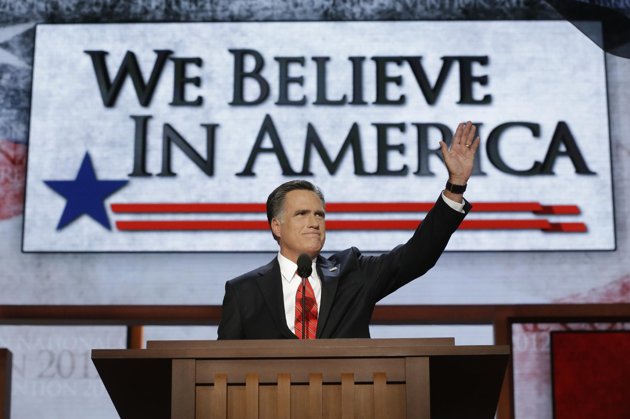
I Believe in America

Mitt Romney Believe in America
As many of you who know me well are aware, I am a bit of a history geek. This passion has led me to study intensively the history and founding of our nation. I believe deeply that it is important to remember that throughout our history, we as a people are responsible for the leaders we elect. The election we are now preparing for could possibly be the most important we have ever had, for it is a battle for the soul of America, or rather, it is a battle for what type of America we will have for us and future generations

I believe in our country, I believe in our proud heritage and I believe that America has the ability to continue to be a great nation. I believe we can be the best force for good in the world, and stand up for what is right and good. We can understand and believe that with the right leadership we can get headed in the right direction. To paraphrase Ronald Reagan, we can be the shining light on the hill to the rest of the world.

As we consider leaders, we often seek ones with experience, with leadership qualities we admire, and with a good ability to communicate. Today I will focus on experience though. When we think about the United States of America, it is a very large and complex body, comparable to a very large ship. It has many different moving parts, personnel that need leadership, and it needs direction and navigation both to move through the storms ahead, and to reach the destination we seek that of an America that is the beacon of hope to the world.

America deserves a captain that is familiar with the ship, its parts, its personnel, and has a clear view of the greatness that America can achieve. That is where Mitt Romney comes in. His experience in such various roles, from businessman to governor has prepared him to be a great leader in America. He has weathered storms as captain of the 2002 Olympics. He has an intricate knowledge of the economy, and a clear view of where we need to go in our future.

Our current president, on the other hand has come into this office with little to no real experience and America has suffered. It is not his fault the economy was suffering when he came into office, but it is time that we realize, under Obama things have not improved as they should have. Why? The reason is because we have had a captain that hasn’t known how, where and when to lead. He relies on his advisers to lead, which has led to some of them being out of control and unaccountable. He has attacked business owners and business in general. FDR once said “the business of America is business.” It seems to me that our current president’s opinion is that the business of America is to attack business.

Financially Obama has increased our debt more than any president, and he has done it in less than 4 years. What has it accomplished? Are we safer than we were four years ago? Is our economy better off than it
was four years ago? No. Having a captain who doesn’t know how to turn the ship around has led to Americans suffering to survive. Attacking crucial mechanizms through over regulation, burdensome tax standards, devaluing our currency, allowing other countries to bully us on economic policies, and leaving future generations with a load of debt that seems insurmountable, does not strengthen america.
In simple terms, we can’t afford to spend four more years on a president who doesn’t understand how the economy works, who doesn’t appreciate the entrepreneurial spirit, and who doesn’t seem to have a  clear view of where America should be heading.

We need a captain, a leader, someone who has been storm tested and has a definite view of the destination.
I believe in America,

do you?


Some reading I encourage
http://www.washingtonpost.com/blogs/right-turn/post/romneys-foreign-policy-the-opposite-of-obamas/2012/07/24/gJQAytNc6W_blog.html

http://www.washingtonpost.com/opinions/charles-krauthammer-did-the-state-make-you-great/2012/07/19/gJQAbZOiwW_story.html?wpisrc=nl_opinions

http://www.washingtonpost.com/opinions/charles-krauthammer-the-imperial-presidency-revisited/2012/07/05/gJQAR66PQW_story.html

Friday, February 3, 2012

The Battle for the Soul of America


As we begin to consider national elections this year we must begin by understanding ourselves and what we wish for our country. The majority of our country believes that we are not heading in the right direction. I believe that we must seek for wise leaders who have correct priorities in their actions as elected representatives. The question becomes what qualities should we look for to determine said wisdom?
Recently a friend of mine Kyle stated "If you really want to change the country for the better then fix the family and study the founders. And I don't even need to say study conservatism because once you study the founders then conservatism becomes the obvious choice. It is the perpetuation of everything the founders stood for - most importantly freedom and individual liberty." I believe that strong conservative values have been the foundation upon which our country has been built.
As a conservative at heart I do believe that conservative values that promote individual liberty and limited government are essential to a free society. Our country was founded on the belief that hard work, strong moral values, and faith in God were essential to our success and prosperity as a country. Through the last few years we have struggled in more than just economics. We have struggled for the soul of America. This struggle on whether we are going to stand by the same values we have held for many years or let them fall.
Holding true to our values is essential and we must not compromise our values. Our founders had varying opinions of what a free society needed in terms of government, especially the national government. What set them most apart, and what we remember them most for was their ability to compromise, and by so doing bringing to pass action, which in turn has brought to pass a prosperous country of over two hundred and thirty years. We have come to an age however that it seems that individual thought clouds the capability of many of our elected officials from being able of acting in the best interest of the country as a whole. While I do not blame either party individually I do blame both for playing to the extremes of their parties. However there does need to be compromise on the issues where we can come together.
What we most need are leaders who will unite us and lead us rather than divide us and follow others. We need leaders who understand how to inspire us to action and to be more than we are. We also need leaders who will lead us into the future.

I encourage you to consider these as you decide on who to vote for this year, I especially encourage you to research each candidate including and most importantly your local officials, and make a decision according to your conscience and vote.