Showing posts with label economy. Show all posts

Wednesday, September 28, 2016

America's Infrastructure Is Crumbling

Image Source:Flickr

This week Congress once again failed to pass a continuing resolution to fund the government. One of the issues they continue to push down the road is the issue of infrastructure funding.

Most of our funding for infrastructure comes from sales tax on gasoline. As vehicles become more efficient, less gas is needed and funding for our infrastructure diminishes.

The American Society of Civil Engineers’(ASCE) most recent report card on the U.S. infrastructure scored a D+. And according to the World Economic Forum, the U.S. now ranks 16th overall in quality of infrastructure, behind other major countries like France, Spain and Japan. According to the ASCE report, an estimated $1.7 trillion in additional spending is needed by 2020 for our surface transportation to be adequately improved.

A recent report showed that there are at least 61,000 bridges which are structurally deficient and in need of serious repair or replacement. These bridges see tens of millions of drivers daily and there is no telling when the next one will fail.


Our roads, for example, require a lot of maintenance, especially after long winters. Potholes and rough roads cost drivers an estimated $324 a year on car repairs. Many cold-weather states and cities sink much of their transportation budgets into repairing these roads yearly.

Right now 42% of America’s city highways are considered highly congested. And that costs our nation's economy an estimated $101 billion in wasted time and fuel each year. Maintaining our infrastructure is also very costly.

Everyone in Congress will tell you that they are very concerned about the nation's crumbling infrastructure, but no one can agree on an approach to repairing it. Short resolutions have pased

The biggest issue is how to fund it. The most commonly suggested plan would be to raise the gas tax a few cents in order to bolster federal Highway Trust Fund revenue. House Republican leaders want to change corporate tax laws that encourage U.S. companies to park foreign profits overseas and use this revenue to fully pay for highway and transit aid. The change would allow corporations to transfer money back to the U.S. at a lower tax rate.

Senator Bernie Sanders, former presidential hopeful, introduced a bill last year which would have increased infrastructure spending by $1 trillion over five years. "My legislation puts 13 million people to work repairing the backlog of infrastructure projects all across this country,” Sanders said. “These projects require equipment, supplies and services, and the hard-earned salaries from these jobs will be spent in countless restaurants, shops and other local businesses. It’s no surprise that groups across the political spectrum – from organized labor to the U.S. Chamber of Commerce – agree that investing in infrastructure will pay dividends for future generations.”

One suggestion by former republican presidential hopeful Ohio Governor John Kasich, was that the federal government decrease their gas tax, thereby allowing individual states with greater infrastructure needs to increase their own gas taxes accordingly, thereby cutting out the middle man and making sure the funding goes to the states with the greatest need.

"Instead of sending our gas tax money to Washington, where federal bureaucrats skim some off the top to pay for their own agencies, Congress should dramatically cut the 18.4 cents-per-gallon federal gas tax to just a few cents per gallon — just enough to pay for interstate connectivity and other safety concerns. States would then be free to set their own gas tax rates, aligned to their own needs as identified by their own residents, communities, and leaders."

For years, transportation experts have called for a massive investment to save a network of roads, bridges and transit systems that has fallen into disrepair. Will Congress work to solve this problem now or punt the question down the road again?

Tuesday, September 22, 2015

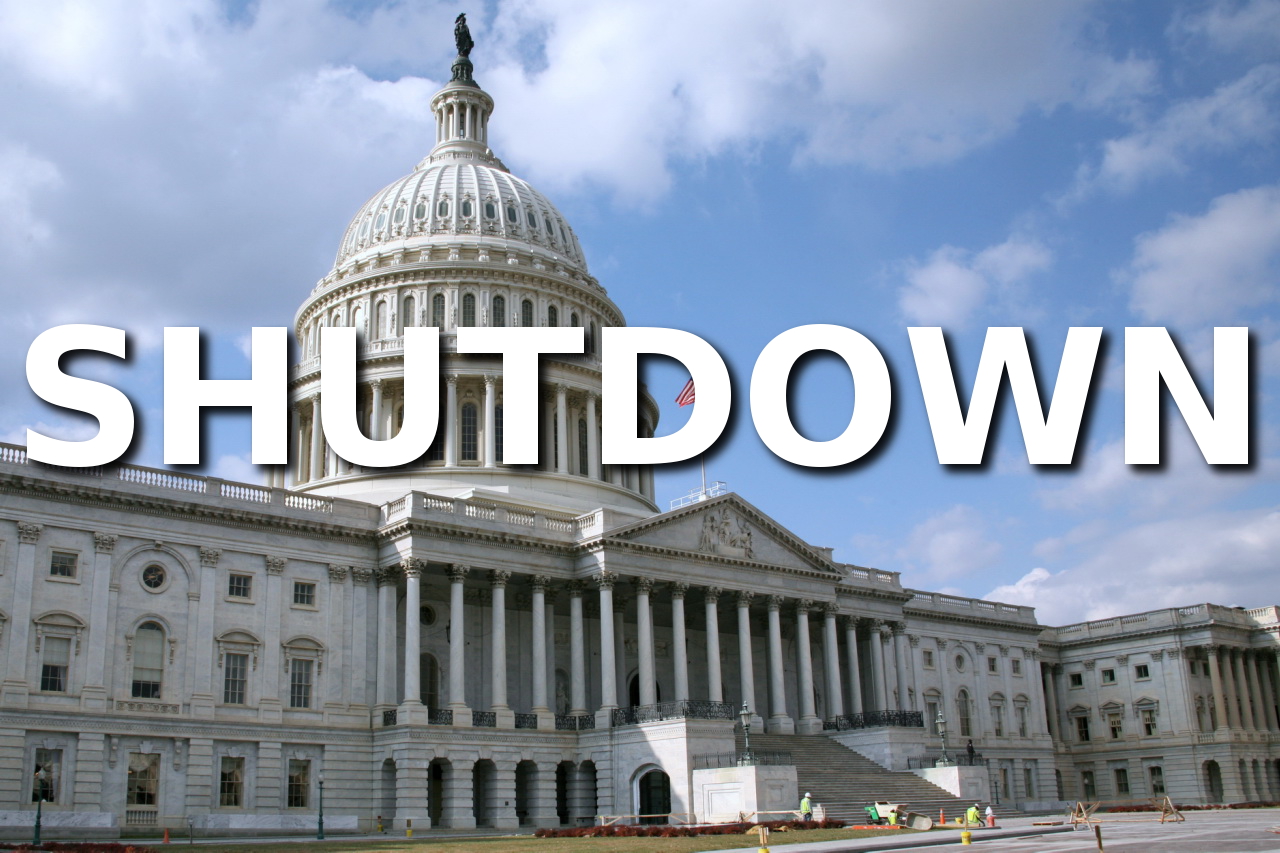
We Are Headed For Another Government Shutdown and It Could Be Costly


The Senate is expected to vote this week toward avoiding a government shutdown on October 1. With little support coming from the House though, it is likely we will see the government shutdown next week. The only real hope is a coalition of moderate Republicans and Democrats working together to pass something this week.

Congressional Republicans are holding up the continuing funding resolution due to a debate over funding Planned Parenthood. This began with videos which showed Planned Parenthood officials discussing payment for procuring aborted baby tissue. These videos have caused an uproar among conservative members of the house and they have been weighing whether to try to strip federal funding for the nation's largest provider of abortions in a spending bill that must be passed before the government’s current funding expires on September 30.

A government shutdown results in non essential portions of the government being shut down. Vital portions would stay intact such as the USPS, Department of  Defense, Social Security, Medicare and Medicaid.

Most of the government actually isn't affected at all, and often even those who are still have workers performing their job functions.The shutdown, saw roughly 800,000 federal employees sent home and national parks and services closed.  Most of these employees however continued work from home on their projects unpaid until the shutdown ends. They were then given back pay for this time period.

The 16-day shutdown in 2013 also stopped the creation of an estimated 120,000 new jobs, according to one report by the Council of Economic Advisers. It dug into the GDP for that year by over 24 billion dollars. Considering the instability in China's markets and with several countries around the world, this is not the time for the government to be causing any decline in economic output.

Until recently, Senate Republicans had indicated they would likely wait to see what kind of spending bill would be passed by the House, where there is greater GOP opposition to any spending measure that includes Planned Parenthood funding. Since the House is only in session for a short time this week and has no such measure on it's calendar the Senate looks to be attempting to act first.

“It’s an exercise in futility," Senate Majority Leader Mitch McConnell said in an interview with Politico. "I’m anxious to defund Planned Parenthood" but "the honest answer of that is that’s not going to happen until you have a president who has a similar view."

This comes as presidential hopeful Senator Ted Cruz has stated his opposition to any bill allowing Planned Parenthood funding. "In light of recent and horrific revelations that Planned Parenthood is trafficking in fetal tissue and body parts from abortions, we urge you not to schedule or facilitate the consideration of any legislation that authorizes or appropriates federal dollars for Planned Parenthood."

Last month he also stated, "I believe we should use every and any procedural tool available to defund Planned Parenthood."

Other Senators have criticized Ted Cruz for his views on a government shutdown. "Given the challenges and threats we face at home and abroad, I oppose risking a government shutdown, particularly when it appears there is no chance of achieving a successful result. Nevertheless, as I understand it, you have been circulating a letter to our colleagues asking them to oppose any government funding bill that continues to authorize funding for Planned Parenthood. … How do we get 60 votes? And if for some reason there were 60 votes, how do we get 67 votes in the Senate to overcome a Presidential veto?” Senator Kelly Ayotte asked in a recent letter. “During the last government shutdown, I repeatedly asked you what your strategy for success was when we did not have the votes to achieve the goal of defunding Obamacare, but I did not receive an answer."

With fears of the economic effects a shutdown could have, industry leaders are calling for compromise. "A democracy is a compromise by its nature. It’s not a dictatorship. So anyone who says, “my way or the highway on one issue,” isn’t necessarily thinking about the United States of America. And so I wish people to overcome that kind of stuff. A government shutdown is just bad management."JP Morgan Chase’s CEO Jamie Dimon said in a recent interview with MSNBC.

Many Americans view it as that; failed leadership by both parties that is leading to a shutdown. A lack of compromise lead the last Congress to be the least effective in history. There is a strong belief that the extremism we are seeing in Congress, displayed in the house especially is directly linked to the gerrymandering of districts throughout the country by both parties. This gerrymandering guarantees seats and power at the cost of extremism. This has lead to the rise of the Tea Party and concerns over the debt ceiling being raised and government shutdowns.


With less than 9 days to go before a possible shut down, it is becoming more and more likely that Congress will not be able to pass a funding bill in time. Democrats are unlikely to back down, and President Obama has already promised he will veto any bill that defunds Planned Parenthood. Some have argued that it was not the founders intent to use the veto as a partisan tool, but rather as a constitutional safe guard against abuse. Others point that this authority has been used in this manner for decades.  Needless to say, if this shutdown lasts longer than the one in 2013 (16 days), it could become very costly to our economy and our government.


Tuesday, September 15, 2015

10 Questions That Should Be Asked at the Next Republican Presidential Debate

Source:Flickr

The second Republican Presidential debate is Wednesday night 8 PM ET on CNN. The last debate afforded each candidate only a few minutes to answer questions.  With the large group of candidates we have, we probably won't be able to see each of these questions answered by each candidate, but I have outlined 10 questions that I wish I could hear each candidate answer.

Under each question I have outlined several other points that need to be addressed, and possible follow up questions for the candidates. Often our debates stop focusing on the issues and start to be shows of entertainment and popularity. We should try to focus on what matters most in our country. I have tried to base my questions on that ideal-that the debates should be about substance not delivery.

1.What is your plan to address immigration reform?
-Some candidates should be asked about their plans such as Trump, whose plan has been deemed by many as unrealistic at best.
-Others support plans to allow illegals to stay, how do they defend that to people who are unemployed or taxpayers who pay at least part of the bill?
-If you are opposed to deportation how do you justify all of the money spent on illegals (education, healthcare and benefits to children etc.)?
-How do you justify it when so many are still out of work?
-How do you plan to secure the border?

2. How do you plan to decrease the deficit and balance the budget?
-What are the  specifics of their plans, some candidates are supporting tax cuts without specifying what they will cut to offset those tax cuts.
-Do you support increasing taxes in any way?
-What do you think about a national sales tax?

3. Do you support or oppose the Iran nuclear deal?
-As commander and chief if you oppose it will you commit to use of military force in Iran?
-If you support it, what would you do if Iran is found cheating on the plan?
-With evidence showing Iranian support of Isis how do you justify supporting the deal?

4. Do you support defunding planned parenthood?
-How would you address those who are concerned about the loss of women's health clinics?
-If you don't support defunding, how will you address the federal government giving half a billion dollars a year to the biggest provider of abortions in our country?

5. The U.S. infrastructure has received a D rating. How would you address our failing infrastructure?
-Some estimates estimate we need to spend hundreds of billions of dollars right now just to bring our infrastructure up to date, including 60,000 bridges which are in need of immediate repair or replacement how will you fund this?
-In what ways will you bring our infrastructure into the 21st century?

6. What are your plans to reform education?
-If you are opposed or support common core how do you think national education should be handled?
-Do you support a national curriculum?
-What are your plans to push our nation forward in education?

7. Do you support legalizing less harmful drugs like marijuana?
-The war on drugs has been costly, how would you address those who say that the war on drugs has failed?
-How do you justify continuing to imprison people for having very small amounts of marijuana on them.
-Do you support drug courts where a person gets treatment instead of going to jail?
-If they support legalization, how do you justify legalizing drugs which can have negative impacts on the brain?
-Do you support more research for DUI testing methods like breathalyzers for marijuana?


8. What is your plan to strengthen our economy?
-Many believe regulations are crippling our economy, as president what regulations would you change?
-Many are concerned about the affects income inequality is having on our country, with wealth increasingly going to the richest 1%. How do you address these concerns as president?
-Consumer debt has almost equaled our national debt, how would you address the growing concerns over the massive amount of debt which is becoming a drag on our economy, especially student loan debt?


9. How will you bring people together to move America forward? Great leaders are measured by what they have done working through compromise to accomplish. We have had too much extremism and not enough listening and compromise.
-What would you do to work across the aisle?
-How have you worked across the aisle to get things done?
-How would you work to mend the wounds within our nation?


10. The next president will inherit 3 massive trade deals the TPP, TTIP and TISA. Would trade negotiations change under your presidency?
-How would you address our growing trade deficit?
-How would you use trade to move our nation forward in the years to come?

What would you like to see asked in the debate? Comment with your question below.

Tuesday, September 8, 2015

Why the Minimum Wage Debate Isn't as Simple As it Seems

Image source:Flickr

For several years now we have seen slow but steady employment growth. While that trend tends to mean we have a strong economy a concern still lingers as wages have lagged behind, increasing at rates lower than inflation. Some have suggested specifically to help those who are in poverty, we should raise the minimum wage which currently stands at $7.25/hr.

It seems simple doesn't it? Just force employers to pay people more. Right now labor groups and liberals across the country have called for at least a $10.10/hr minimum wage. Polling consistently shows that across the spectrum there is wide support for raising the minimum wage.

Others like Senator Bernie Sanders a leading candidate for the Democratic Nomination for president. have called for upwards of $15/hr, their argument states that if today's minimum wage kept up with worker productivity it would be over $21.72/hr.

In a press release introducing his bill to raise the federal minimum wage to $15 an hour Senator Sanders said "Increasing the minimum wage would directly benefit 62 million workers who currently make less than $15 an hour, including over half of African-American workers and close to 60 percent of Latino workers.  If the minimum wage had kept up with productivity and inflation since 1968, it would be more than $26 an hour today."

It is true that if the minimum wage from the 1960's had kept up with inflation, the minimum wage would be $10.52, but the 1960's was the highest point (inflation adjusted) for the minimum wage.

Opponents of the minimum wage like Senator Ted Cruz, also a presidential candidate have said that the real cost in the minimum wage is lost jobs. That in order to increase wages we need to focus on increasing the number of high tech manufacturing and energy jobs.

“Those who are being hurt the most in the Obama economy are the most vulnerable among us – young people, Hispanics, African-Americans and single moms,” Sen. Cruz said. “They are the ones paying the price for the great stagnation in which we find ourselves. The undeniable truth is if the president succeeded in raising the minimum wage, it would cost jobs from the most vulnerable.”

“The discussion before this chamber is whether to raise the minimum wage to $10.10 an hour,” Sen. Cruz continued. “But, even if it passed, the real Obama minimum wage is zero dollars and zero cents. Far better than the promise of $10.10 an hour, is $46.98 – the wage Americans can earn in the oil and gas industry. We ought to come together with bipartisan unanimity to say we will stand with the American people to bring millions of jobs, raise median income and make it easier for people who are struggling to achieve the American Dream. We should all come together and vote on the American Energy Renaissance Act, to remove government barriers and open up new federal lands and resources to develop high-paying, promising jobs that expand opportunity.”

A few facts first, only about 3 percent of those who work are working for the federal minimum wage. Many states have set higher minimum wages than the federal one. A very small percentage of those are supporting a family with that income.

So why don't we raise the national minimum wage? Wages have stagnated which has limited the growth of our economy and has weakened the middle class. Why not raise it to $50 an hour and give the vast majority of Americans a raise? There are several reasons opponents to increasing the minimum wage give for not increasing it.

According to the Heritage foundation, here are several quick facts about the minimum wage:

  • Studies find raising the minimum wage does not reduce poverty.[1] It is a completely ineffective anti-poverty policy.
  • The primary value of minimum-wage jobs is that they are learning jobs. They teach inexperienced employees basic employment skills that make them more productive and enable them to earn raises or move to better jobs.
  • Over half of all Americans started their careers making within $1 of the minimum wage.[2] Few stayed there long.
  • Two-thirds of minimum-wage workers earn raises within a year—without the government’s help.[3]
  • Correctly adjusted for inflation, the minimum wage currently stands above its historical average since 1950.[4]
  • The minimum wage hike sponsored by some Members of Congress and supported by President Obama would raise the minimum wage to an unprecedented level—one-seventh above its inflation-adjusted all-time high.[5]
  • This would cause employers to reduce hiring, leaving fewer people employed.[6] Macroeconomic modeling shows the proposed minimum wage increase would eliminate 300,000 jobs.[7] That means fewer opportunities for unskilled workers to get started in the labor market and move their way up.
  • When businesses have to pay higher wages, businesses hire higher-skill workers, freezing the least productive, most disadvantaged workers out of the job market.[8][9] Consequently minimum wage hikes harm the very people that proponents of the laws most want to help.
  • Primarily Affects Younger Workers Without Family Responsibilities
  • Only 2.9 percent of wage earners earn the federal minimum wage.[10][11][12]
  • Most minimum-wage earners are teenagers or young adults, not heads of families.
  • Over half of minimum-wage earners are between the ages of 16 and 24.[13]
  • Two-thirds work part time (defined as less than 35 hours a week).[14]
  • The average family income of a minimum-wage worker is $53,000 a year, less than the national average of $79,500 a year but well above the poverty level.[15]
  • Two-thirds of minimum-wage workers live in families with incomes above 150 percent of the poverty line.[16]
  • Just 4 percent of minimum-wage workers are single parents working full time, compared to 5.6 percent of all U.S. workers.[17]
  • The Obamacare employer mandate is already scheduled to raise the cost of hiring less-skilled workers. When the mandate takes effect in 2015 the minimum cost of hiring a full-time worker will rise to $10.30 an hour. That includes the minimum wage, employer payroll taxes, and the employer mandate.[18]
  • From the employer’s perspective the cost of hiring workers has increased, but the additional money goes to the government instead of the employees.[19]
  • The proposed minimum wage increase of $10.10 an hour would bring the minimum cost of hiring a full-time worker—including the Obamacare penalties—to $12.71 an hour.[20]

On the other side the White House in a press release stated the following:
"The Economic Case for Raising the Minimum Wage from White House

The inflation-adjusted value of the minimum wage has fallen by more than a third from its peak and is currently about twenty percent less than it was when President Ronald Reagan first took office in 1981. The minimum wage helps support family incomes, reducing inequality and poverty—especially for female earners. But as the real value of the minimum wage been allowed to erode, it has stopped serving this important purpose. The minimum wage is now just 36 percent of the average wage and trending lower, as those at the low end of the income distribution are in increasing danger of being left behind while the economic recovery continues to unfold.

Raising the minimum wage to $10.10 per hour would benefit a wide range of families. New estimates from the Council of Economic Advisers find that when it is fully phased in 28 million workers would see a raise, including 19 million making less than $10.10 and another 8 million with wages just above $10.10 who would benefit from the ripple effect. These wages increases would be progressive with nearly half of the benefits going to households making under $35,000, but they would also benefit millions of middle class families, for example ones in which a spouse worked part-time at the minimum wage to help the family’s overall income. In total more than half of the workers that benefit are women. Only 12 percent of minimum wage beneficiaries are teenagers and the remainder of the beneficiaries include a wide cross section of families with children, couples, and others.

Partly as a result of the more than one-third reduction in the inflation-adjusted minimum wage since 1967, research has found that the poverty rate based only on market incomes has not fallen since the 1960s. Fortunately, as discussed in this recent Council of Economic Advisers report, expansions in rewards for work like the Earned Income Tax Credit and in programs like the Supplemental Nutrition Assistance Program have contributed to a significant reduction in the poverty rate. Thus, while it is critically important to support these programs—including extending emergency unemployment insurance, ensuring robust nutritional assistance, and making permanent the enhancements to the Earned Income Tax Credit and child tax credit—we also need a renewed emphasis on measures that reduce poverty by improving market wages. Raising the minimum wage is the most direct and immediate policy in this regard.

The President supports raising the minimum wage to $10.10 an hour in three steps (and also raising the minimum wage for tipped workers), ensuring that wages and tax credits are sufficient to lift a family of four with one full-time worker above the poverty line. After raising the minimum wage to $10.10 an hour, the proposed legislation would also index it to inflation going forward, so that workers earning the minimum wage never again see significant erosions in their inflation-adjusted wages.

Finally, as one recent review of minimum wage research published since 2000 concluded, “The weight of that evidence points to little or no employment response to modest increases in the minimum wage.” Many economists now believe that a substantial portion of the cost to employers of minimum wage increases is offset by savings from reduced employee turnover and higher worker productivity. Moreover, in the short-run in an economy that is still demand-constrained, raising the minimum wage will increase the purchasing power of a vital segment of workers and contribute to stronger overall economic activity."

Wages, and especially the minimum wage are a balancing act. There are more options available other than raising the federal minimum wage that some are considering. Several states have considered bills to effect greater limits on the widening gap between CEO and average worker pay. Some have suggested that the issue should be dealt with on a state by state or even city by city basis, allowing cities like Seattle to have a higher minimum wage while not affecting states where the cost of living is much lower. 

Governor John Kasich of Ohio who is currently a presidential hopeful expressed why he feels a state by state option for raising the minimum wage might be best:

"We’d all like to see it go up, but we don’t want to see the unintended consequence of people losing their jobs," Kasich said. "Back in Columbus, the head of Wendy’s said that if these wages go up too high, they’re just gonna put kiosks in and people won’t be there to take orders. It's about balance. We're doing fine in Ohio. I would prefer for the states to deal with it, at this point."

As we continue to debate this situation, we need to remember that this issue can have massive effects on the economy as a whole. For a stable economy we need to see wages rise. Companies will always weigh the cost of employees to their profit margin and jobs may be lost. The debate for the most part though will remain whether increased wages should come from the market itself, or being mandated by the government — whether that be on city, state, or federal levels.


Friday, September 4, 2015

Jobs Report: 5.1 Unemployment Rate Doesn't Tell the Whole Story

The monthly jobs report in the U.S. comes from the Bureau of Labor statistics'(BLS) Current Population Survey(CPS). The CPS is a survey conducted by the United States Census Bureau for the BLS. The BLS uses the data to provide a monthly report on the Employment Situation in the U.S. This report provides estimates of the number people who are employed and unemployed in the United States.

In August, the economy added an estimated 173,000 jobs and the unemployment rate dropped to 5.1%. This is lower than the estimated 217,000 jobs most economists had expected.Employment in health care rose by 41,000. Employment in financial activities rose by 19,000 in August.
in August. 

Though America has added jobs in recent months, this is a good reason to be optimistic. There is some concern  that the increase in jobs has not been seen as widely in the manufacturing, according to Thomas Hemphill & Mark Perry :

"In September 2012, President Obama announced a national goal to create 1 million new manufacturing positions by the end of 2016. Since that announcement, the US manufacturing sector has created payroll jobs at a rate of only 11,000 per month and fewer than 300,000 jobs in total over the last 27 months. That rate of factory job creation would generate only about 560,000 new jobs by the time Obama leaves office -- a 440,000 job shortfall compared to the president's unrealistic goal of 1 million new factory jobs by the end of next year."

"We'll be lucky if we gain 600,000 jobs by next December. Even in that case, factory employment would only return to the January 2009 level of about 12.5 million payroll jobs, which at that time was the lowest level since the late 1940s, and 7 million jobs below the 1979-peak of 19.5 million factory jobs."


27 thousand jobs in manufacturing mining and logging were lost last month, undoing all the gains from the previous month. The lack of manufacturing jobs is a concern because they provide stability and strength to the economy.

So is the 5.1% number telling us the full story? The number you see in the headlines is referred to as the U-3 number which does not include:

  • People who have been out of work for more than a year
  • Those in part-time positions for people who would prefer full-time employment
  • People so discouraged that they’ve stopped looking for work
When we include these numbers, referred to as the U-6, the unemployment rate is nearer to 10% down from 12% last year. It is important to note that both numbers have been decreasing steadily since the beginning of the recession, and especially within the last two years. It is unclear why the news media only uses the U-3 number in their report.

The unemployment rate drop can also be attributed to fewer people being counted as out of work but instead being considered outside of the workforce. The jobs report’s survey puts the number of unemployed persons down 237,000 to 8 million. The number of people out of the workforce climbed 261,000 to a fresh record of 94 million. We currently have the lowest labor participation rate in decades.

This can be attributed though to increased retirement by the baby boom generation. The survey includes all working age adults (age 16 and up). 94 million includes all stay at home mom's, people in college, and those who are retired.

Why does the unemployment number matter so much right now? The Federal Reserve has waited for the economy to show enough strength to start increasing interest rates. Most economists believed that if August showed strong numbers in job growth that would be the signal to being increases. One concern has been wages, which have not shown much growth for the last year, but which grew 8 cents in the month of August, which is cause for optimism.

While the report may not change views that the U.S. economy remains strong, the global markets remain unsteady including significant decline in China. This instability could further complicate the Fed's decision at a policy meeting mid month.

The reason why the interest rate is so important to job growth as explained by CNN Money:

"One of the Federal Reserve’s mandates is is to maintain full employment. When unemployment rises, it can try to stimulate growth by cutting rates. The idea is that cheaper borrowing makes it easier for consumers to spend and for businesses to expand and hire new workers. The flipside is that higher interest rates and tighter money supply can make hiring less likely. That’s one of the reasons the Fed has been so hesitant to raise rates in recent years, and there’s a risk that a too-early rate hike will cut off job growth."

Overall the continued growth is a good sign for the economy and it is likely we will start to see interest rates increase in September. Most of the indicators for the U.S. economy are showing good signs.

Tuesday, September 1, 2015

What's Wrong With the News?


About 50 years ago more than 80 companies controlled the majority of print and television media in the U.S. That number is now down to 6. These 6 mega huge corporations — News Corp, Disney, Viacom, Time Warner, CBS, and Comcast have changed the way we receive the news on a daily basis, and that isn't necessarily a good thing.

It isn't fully their fault that most people are ill informed, part of the blame lies with each of us. We have at our fingertips the ability to access nearly limitless amounts of information. Our 20 second attention spans and lack of interest in doing our own research is part of the problem. But part of the issue is the major shift we have seen from print media to online and cable TV news reporting.

Many of the old time newspapers were able to focus on subscriptions which meant quality reporting was their main focus. The more quality reporting you had, with quality writers and columnists, the more subscriptions you could sell. Advertising sales would increase with subscriptions, but the focus was on content. Reporters would dig deep to get scoops on corruption in government, and issues that were affecting the average person.

Then the internet came around and for over 7 years now print media has declined, especially subscription to newspapers. Many will only get the newspaper for coupons or shopping ads on Sunday. Other sections that were once considered must reads go into the recycling bin as boring and out of date.

Switching to online media has made many of these companies go away from traditional reporting to celebrity and click worthy news reports. Digital advertising has grown massively with these companies, as they have sought to cover the loss from print media. The focus has shifted from news and print media to online and cable news networks.

We have seen a rise in entertaining news rather than informative. The massive popularity shows like the O'Reilly Factor, the Daily Show, the Colbert Report, and Last Week Tonight are indicative of this. Trials like Jodi Arias, which were once only covered by local media now become media circuses with live coverage. 24 hour news cycle is forcing news outlets to have news out immediately as events unfold, even if reporting hasn't been completed.

Facebook and Twitter have also had their impact. Focus on social media and mobile has forced content into 140 characters or less idea, leaving readers with the base understanding, but lacking any depth in content. News media outlets like The Huffington Post, Drudge and The Blaze have taken so much of the online focus that much of news has become focused on being viral content.

Since this shift has occurred you are more likely to hear about Kanye West running for president in 2020 than possible ideas to change the tax code. With old print media, there was the opportunity to explain an issue in great depth; now it often must either have a great deal of opinion and controversy or some sort of celebrity pull for it to be front page news.

Some news outlets are focusing on specific demographics, applying themselves to the "left" or "right" in order to get more people watching their networks, or reading their articles.

There is some hope however, with focused news sites like politico and the hill, which focus much less on biased political reporting and more on facts and informing. Aggregate news sites like realclearpolitics can help you weed through some of the distractions to meaningful posts.

These changes to the way news media functions have altered the way we view our country, our government and the world in general. Citizens are less informed while having more access to news media than ever before. The news channels or stations we watch and listen to can also have a major impact on how informed we are as citizens.

As we now face a new presidential election cycle it is more important than ever that we focus on educating ourselves on the issues and candidates, having open minds and hearts, and being aware of the needs of our country. We should challenge ourselves to do better, by being wiser in what we watch, read and listen to.

Friday, August 28, 2015

The Other National Debt No One Talks About

Image Source: Flickr
As we look at the state of the economy some people may be wondering,"Why, if jobs are increasing, are we not seeing other signs of improvement?" Though unemployment was down to 5.3% in July, wages only rose a few cents, and overall they have barely kept up with inflation since the beginning of the recovery.

Part of the problem may be people transitioning into new fields out of manufacturing into retail, healthcare or IT jobs; another is that people have less money after taking care of their bills to spend on the economy. One of the biggest obstacles to our economy is the massive debt burden that most Americans are carrying.

Current as of August 2015

U.S. household consumer debt profile:
  • Average credit card debt: $15,706
  • Average mortgage debt: $156,333
  • Average student loan debt: $32,953
In total, American consumers owe:
  • $11.85 trillion in debt
  • An increase of 1.7% from last year
  • $890.9 billion in credit card debt
  • $8.17 trillion in mortgages
  • $1.19 trillion in student loans
  • An increase of 7.1% from last year

With student loans alone, over 11.5 percent of the $1.19 trillion owed is in default. That number is up slightly compared to the 10.9 percent default rate we saw last year around the same time.

Why is debt such a major obstacle to our economy? When people are paying hundreds of dollars in credit card and student loan payments they don't have the money to buy a new car, put a down-payment on a house or start a business.

While we currently have a national debt of $18.3 trillion which our federal government owes, the $11.85 trillion which we as Americans owe is more concerning. 60% of college seniors have credit cards leaving college, with most of them carrying a balance. This may require them to take jobs that offer a guaranteed paycheck such as in retail versus interning or doing volunteer work out of college.

Student loan debt has been increasing drastically over the last decade as the cost of attendance increases. The worse news is that it can have even longer lasting effects. A recent by Gallup showed that:

"College graduates who carry a high amount of student debt appear to face long-term challenges that stretch beyond just their finances. A new analysis of Americans who graduated college between 1990 and 2014 shows that graduates who took on the highest amounts of student debt, $50,000 or more, are less likely than their fellow graduates who did not borrow for college to be thriving in four of five elements of well-being: purpose, financial, community, and physical."


It is no wonder that individuals offering debt advice like Dave Ramsey are becoming so popular. With so many Americans carrying such a large load in debt, the burden is becoming too great. While many point to the subprime mortgage crisis of 2008, if we were to have a major crisis right now with mass layoffs it could cripple our economy for years to come. With the current amount of consumer debt there would be a major unavailability of consumer spending to pull us out of a crisis. With 70 percent of our economy reliant on consumer purchases that could be devastating. 

Tuesday, August 25, 2015

Are We Headed for Another Recession?

Image Source:Flickr
The Dow Jones Industrial Average(DOW) plummeted more than 1,000 points Monday morning. This fall in the stock market affected millions of Americans’ retirement plans, and many had fears of a recession returning. While stocks regained some of their lost ground by Monday afternoon, continued uncertainty over the global economy could have further impact.

The DOW is an indicator of U.S. industrial strength. It is one of the most watched stock indexes in the world, containing many massive companies like General Electric, Microsoft, Coca-Cola, and Exxon.

This all started with concerns over slowing growth in China's economy. China is the world's second-biggest economy. For two decades the country has seen explosive growth which has been the engine for the global economy. Their government is deep in debt from massive infrastructure growth. The country’s national debt rose from $7 trillion in 2007 to $28 trillion by mid-2014.

As their economy slows, their need for materials from other countries slows, and the effects can be felt world wide. There are many concerns that this could lead to a recession. A recession is considered two quarters of negative economic growth in a row. Historically we have seen a recession about once every five years since World War II. This window of time has lengthened, though, in the past couple of decades as times of growth have lasted longer due to the strengthened ability for the global economy to take a hit.

So are we now headed into the next recession? Well that depends on who you listen to. Most analysts are referring to the recent dip in the stock market as a market correction. Many people believe that the stock market's prices were inflated, meaning they cost more than they were actually worth, and that a correction like we saw yesterday was very necessary for the long term stability and strength of the stock market.

Some however look at the news coming from China as another signal of a stagnating economy that may fall back into a recession. In the U.S. wages have stagnated for years, and there are concerns over the direction of the future of the economy.

The reason most analysts aren't concerned over a major economic downturn is that the U.S. Economy has been gaining strength, especially in the energy sector where the U.S. has recently become the top oil and natural gas producer in the world.

Others point to new innovation with companies like Apple and Tesla to fuel new economic growth in the U.S. The bottom line is, though the market dipped, the economy is most likely not heading for a recession this year.


Tuesday, August 18, 2015

The Donald Trump Immigration Plan Would Never Work and Here's Why

Since Donald Trump's announcement that he was running for president, he has been pounding his plan to fix illegal immigration. As part of his plan, he announced that he would build a fence to keep out illegal immigrants from Mexico. (even if the vast majority of illegal immigrants are not from Mexico, and the population of illegals has stayed the same over the last five years around 11 million)

His big plan includes building a wall at the U.S. border and deport those who are here illegally. This sounds simple enough right? He claims he will force Mexico to pay for the wall. How exactly?

According to his website: "Mexico must pay for the wall and, until they do, the United States will, among other things: impound all remittance payments derived from illegal wages; increase fees on all temporary visas issued to Mexican CEOs and diplomats (and if necessary cancel them); increase fees on all border crossing cards – of which we issue about 1 million to Mexican nationals each year (a major source of visa overstays); increase fees on all NAFTA worker visas from Mexico (another major source of overstays); and increase fees at ports of entry to the United States from Mexico [Tariffs and foreign aid cuts are also options].  We will not be taken advantage of anymore."

Apparently Donald Trump is under the impression he can just pass whatever rules he wants and that nothing will happen. Let's play along though and say that he does get the increase in fees in order to pay for the $6 billion wall he wants to put in place. Does he imagine if we implement increases in fees that they won't increase theirs or put the costs back to us in goods that come here? Does he imagine if he were to put tariffs on Mexican goods the WTO wouldn't slap us with a massive fine of billions of dollars for doing so? He also says he wouldn't build it until after illegal immigrants were deported.

Does he not think that such actions would have massive affects that would ripple across the U.S. economy, leading possibly to another recession? But Congress as lazy as they are would never agree to this to begin with, so it is unlikely that would happen.

Next he imagines somehow that he would be able to deport millions of illegals living in the U.S, even ones who have only really ever known this country as their home and have no family or friends in other countries, and might not even speak the language. He imagines that somehow he'd be able to do this in 2 years. He seems to think he is a king and can ignore the bill of rights, the fact that he doesn't have the authority to fund any of this as president, and it would be very unlikely that Congress would pass a bill funding the mass deportation of immigrants.

Even if he got past the governors in states that are friendly to illegals, and gets permission from Congress, the cost to deport that many people has been estimated between $140 and $200 billion. We would also probably need an additional $2-3 billion a year for enforcement as well including all administrative costs, repairs, additional security measures etc.

The economic toll would be massive, leaving businesses without workers, shutting down many small businesses owned by illegals, leaving millions of property managers without tenants, we would see increased food prices with fewer workers in the fields etc. This would cost our economy billions of dollars in lost profits.

On food alone, the cost could be staggering according to The Hill: "From the perspective of National Milk Producers Federation in 2009, retail milk prices would increase by 61 percent if its immigrant labor force were to be eliminated...In terms of overall numbers, The Department of Labor reports that of the 2.5 million farm workers in the U.S., over half (53 percent) are illegal immigrants. Growers and labor unions put this figure at 70 percent. "

In 2006 over five hundred economists (including five Nobel laureates) sent a letter to then President George W. Buh which stated the following:  “While a small percentage of native-born Americans may be harmed by immigration, vastly more Americans benefit from the contributions that immigrants make to our economy, including lower consumer prices.”

Some estimates of total cost to the GDP place the decrease at $1.6 trillion. Meanwhile the gang of eight bill, which Trump has criticized so heavily would have secured the border, implemented e-verify and put into place a plan for illegal immigrants to stay here and work toward a path to citizenship. The CBO estimated that this plan would cut the deficit by over $190 billion dollars, even after counting the cost of the added security along the border.

Trump also ignores that border security has already been beefed up, and the amount of illegals coming in has already significantly dropped because of the difficulty in crossing. The gang of eight bill realized that we needed more than just a fence, and implemented drones, electronic surveillance and significantly increased numbers of ground security. Building a fence or wall isn't going to guarantee no one comes, yes we need to secure the border but it needs to be done in a way that makes sense, not one that just sounds good in a soundbite.

We do need to work towards fixing our immigration issues, but we need to do this in a way that helps our economy and strengthens our nation. Diving into more massive debt and devastating our economy is not a smart method to protecting our national interests. While Trump may be a smart businessman, he obviously doesn't understand the complexity of the U.S. economy.

Tuesday, December 17, 2013

Mainstream Media Control

I read a lot of news articles every day, and I try my best to read articles from across the country and world, from different viewpoints. But until recently I didn't know that really many of these organizations are the same at the core.

Did you know that in 1983 the mainstream media was made up of a collection of more than 50 companies, and that now power and control of our news outlets has been condensed to 6 mega huge corporations — News Corp, Disney, Viacom, Time Warner, CBS, and Comcast — who work in conjunction with various political figures to literally decide what news is delivered to the public, and what level of truth is behind that news. They control everything we watch, read, and hear in regards to the news.

The truly terrifying thing about our current reality is that there are so many things wrong with America, with our presidential administration, and our overall standing on the global stage that the media simply isn’t reporting on. This translates to ordinary Americans who are completely unaware of the poor economic health of our country.

While they may be aware that we are still coming out of a recession, the media reports that unemployment is around 7 percent. The truth is that our unemployment is closer to 23 percent according to government shadow statistics.


The 7 percent number makes things not sound as bad right? Well that's because it doesn't include people who have been out of work for more than a year, those in part-time positions who’d prefer full-time jobs and people who are so discouraged that they’ve stopped looking for work. This is the lie that the media is telling you.

So wake up and do your own research! Shake up the world and get involved. Read and observe and most of all get involved in the world around you! The core of American Democracy is civic engagement and it has begun to wither as people have slumped into their chairs and left it up to politicians to decide their fate. In honor of Peter O'Toole I will add this one quote from Lawrence of Arabia "Nothing is written." 

Monday, April 29, 2013

3 year anniversary of Obamacare

By Tim Newton
Congratulations Obamacare! Your monstrous 2000 page law is now 3 years old. I missed the actual date for celebrating it, but I wanted to do a short follow up on some thoughts that I have on Health Care reform. As you may remember Obamacare was the 2010 law that was enacted to bring about universal health care reform. It included popular provisions like extending coverage for dependent children to 26 and allowing for preexisting conditions to be included. It also included less popular provisions such as the individual mandate (which was upheld by the supreme court under congresses taxation powers) and the expansion of medicare. At this point 3 years later Obamacare still has not been fully implemented, and is due to be fully implemented this year if it goes according to the set schedule of the bill. 

During his campaign in 2008 Barack Obama promised that "I will sign a universal health care bill into law by the end of my first term as president that will cover every American and cut the cost of a typical family's premium by up to $2,500 a year."

Many Americans are now asking questions like: what happened to real health care reform? Why are we paying absurd premiums and taking home less of our pay because we're paying too high of premiums? have you heard of a company that has decided not to hire someone because the cost of benefits has become too high? What happened to the law that was signed and would limit the cost of premiums and make healthcare more affordable for all. Has it? Not only has it failed to become more affordable, our premiums on average have increased incredibly and federal spending is set to increase dramatically over the next decade on it and increase our current programs, but why are we surprised at any of this? Nancy Pelosi herself said it best when she said "But we have to pass the [health care] bill so that you can find out what’s in it.” She later explained that "why I was saying we have to pass a bill so we can see so that we can show you what it is and what it isn’t...But the fact is, until you have a bill, you can’t really, we can’t really debunk what they’re saying."


Much of the increased spending that you see in the graph above comes from the expansion of medicare, which states were given some freedom to decide on. Many have opted in, and some will opt out. There will be more spending guaranteed though, and for me I see it as less effective rather than more effective, but maybe I'll save that for another posts.

So let's think about this, what were republicans saying exactly when (then) Speaker Pelosi made that statement? Each of these is supported by her statement to the Washington Post that this is what she meant. She said republicans said it was about job killing. Have jobs increased? She said more than 4 Million jobs would be created by it's implementation. We have heard numerous accounts of jobs being lost or hours being cut because of Obamacare. It was about death panels. Well seeing as Obamacare had nothing in it's implementation to increase the amount of doctors, we most likely will have limited coverage as the years continue, especially ad medicaid and medicare continue to grow and cover more individuals. So what else could republicans have possibly been angry about? Apparently it never really got through to her that maybe we didn't want more government involved in our lives making decisions for us. 

On top of all this, we heard this week about congress trying to exempt it's staffers from the exchange program. To clarify some of this (as there has been some confusion) I quote from the Politico story that broke the news 

"The problem stems from whether members and aides set to enter the exchanges would have their health insurance premiums subsidized by their employer — in this case, the federal government. If not, aides and lawmakers in both parties fear that staffers — especially low-paid junior aides — could be hit with thousands of dollars in new health care costs, prompting them to seek jobs elsewhere. Older, more senior staffers could also retire or jump to the private sector rather than face a big financial penalty."

This problem stems from an amendment to the ACA that altered government responsibility to employees, and from what I can tell congress is not trying to exempt itself or its staffers from Obamacare as we all know that would be political suicide for any party involved. For a better explanation of this go here.

Continuing back to the original discussion here, I have never been a big fan of enacting laws to get people to do things. I have long been a supporter of the idea that you teach people and lead by example and people will follow. healthcare is the same as anything else, you lead by example, people will follow.


So what really needs to be done on healthcare? The number one focus should be decreasing the epidemic of obesity in the country. two thirds of the country is considered overweight, and we are just shy of 1/3 of the adult population in the country is obese. Tackling this problem through proper eating habits and exercise should be our main focus, and we need our leaders at the national, state and local levels to focus on this immediately if we are to avoid the incredibly dangerous health risks associated with it.

But what is being done? I am glad and a big proponent of the show "The Biggest Loser." As I believe that it has shed a great deal of light on the situation. If we are to accomplish beating this epidemic we need leaders that will stand up and recognize the problem for what it is, a drain on our healthcare system. Treating the health factors of diabetes and heart disease is crushing our system. The CDC and other organizations are trying to spread the word among Americans that we need to change our lifestyles. If we want premiums to go down, we need a healthier America. Exercise has further benefits beyond maintaining a healthy weight. It can increase our immune system, decreases stress, increases happiness, increases your brain's capabilities among other things.

So get off the computer and go out and take a walk!(after finishing reading this) and spread the news.

But what about Obamacare? As it stands it is the law of the land, and that is unlikely to change. It has become overwhelmingly mingled with our current regulations and while it is seeming extremely costly and we may wish that it would go away, it is unlikely to do so soon. So my recommendation for decreasing your healthcare costs? Get healthy on your own, go join a gym, learn to cook foods that are better for you, and cut down on the things that are bad for your body. Maybe Obamacare won't ever decrease our healthcare costs, but maybe we can.

Tuesday, July 24, 2012

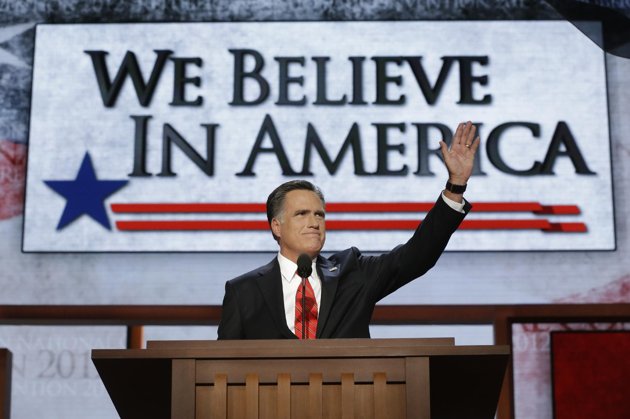
I Believe in America

Mitt Romney Believe in America
As many of you who know me well are aware, I am a bit of a history geek. This passion has led me to study intensively the history and founding of our nation. I believe deeply that it is important to remember that throughout our history, we as a people are responsible for the leaders we elect. The election we are now preparing for could possibly be the most important we have ever had, for it is a battle for the soul of America, or rather, it is a battle for what type of America we will have for us and future generations

I believe in our country, I believe in our proud heritage and I believe that America has the ability to continue to be a great nation. I believe we can be the best force for good in the world, and stand up for what is right and good. We can understand and believe that with the right leadership we can get headed in the right direction. To paraphrase Ronald Reagan, we can be the shining light on the hill to the rest of the world.

As we consider leaders, we often seek ones with experience, with leadership qualities we admire, and with a good ability to communicate. Today I will focus on experience though. When we think about the United States of America, it is a very large and complex body, comparable to a very large ship. It has many different moving parts, personnel that need leadership, and it needs direction and navigation both to move through the storms ahead, and to reach the destination we seek that of an America that is the beacon of hope to the world.

America deserves a captain that is familiar with the ship, its parts, its personnel, and has a clear view of the greatness that America can achieve. That is where Mitt Romney comes in. His experience in such various roles, from businessman to governor has prepared him to be a great leader in America. He has weathered storms as captain of the 2002 Olympics. He has an intricate knowledge of the economy, and a clear view of where we need to go in our future.

Our current president, on the other hand has come into this office with little to no real experience and America has suffered. It is not his fault the economy was suffering when he came into office, but it is time that we realize, under Obama things have not improved as they should have. Why? The reason is because we have had a captain that hasn’t known how, where and when to lead. He relies on his advisers to lead, which has led to some of them being out of control and unaccountable. He has attacked business owners and business in general. FDR once said “the business of America is business.” It seems to me that our current president’s opinion is that the business of America is to attack business.

Financially Obama has increased our debt more than any president, and he has done it in less than 4 years. What has it accomplished? Are we safer than we were four years ago? Is our economy better off than it
was four years ago? No. Having a captain who doesn’t know how to turn the ship around has led to Americans suffering to survive. Attacking crucial mechanizms through over regulation, burdensome tax standards, devaluing our currency, allowing other countries to bully us on economic policies, and leaving future generations with a load of debt that seems insurmountable, does not strengthen america.
In simple terms, we can’t afford to spend four more years on a president who doesn’t understand how the economy works, who doesn’t appreciate the entrepreneurial spirit, and who doesn’t seem to have a  clear view of where America should be heading.

We need a captain, a leader, someone who has been storm tested and has a definite view of the destination.
I believe in America,

do you?


Some reading I encourage
http://www.washingtonpost.com/blogs/right-turn/post/romneys-foreign-policy-the-opposite-of-obamas/2012/07/24/gJQAytNc6W_blog.html

http://www.washingtonpost.com/opinions/charles-krauthammer-did-the-state-make-you-great/2012/07/19/gJQAbZOiwW_story.html?wpisrc=nl_opinions

http://www.washingtonpost.com/opinions/charles-krauthammer-the-imperial-presidency-revisited/2012/07/05/gJQAR66PQW_story.html