Saturday, February 6, 2016

Who Won Tonight's Debate?

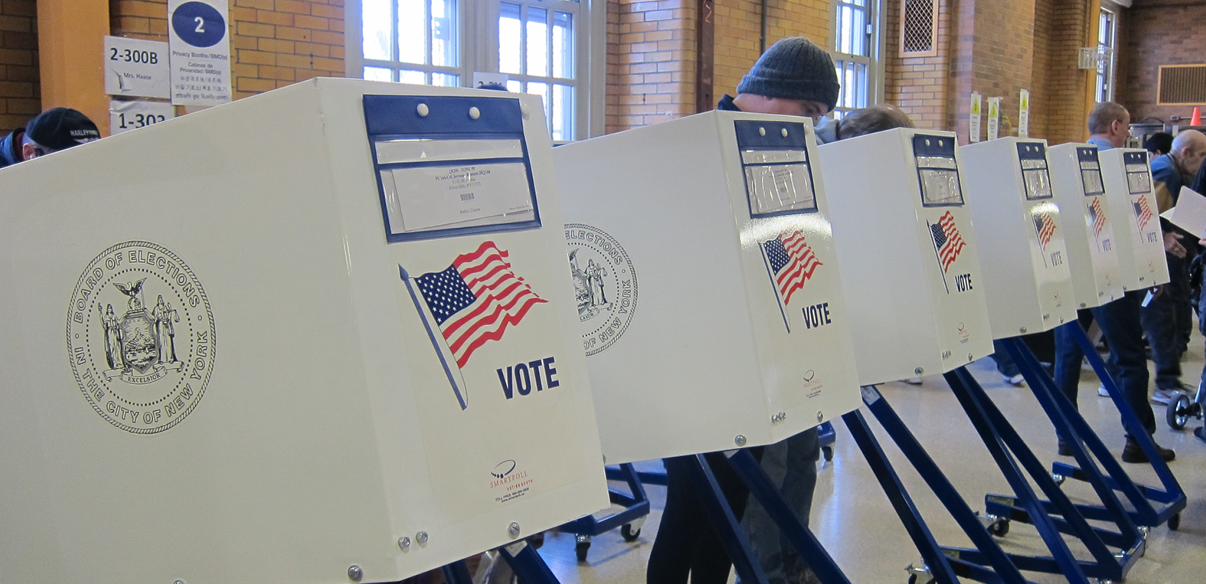
The final debate before the nation's first primary in New Hampshire is in the books. Who do you think won tonight's debate? Who lost? Who had the best moment? Vote now and tell us your thoughts in the comments.


Who do you think won tonight's debate?

Chris Christie
Ted Cruz
Donald Trump
John Kasich
Marco Rubio
Jeb Bush
Ben Carson
Do Quizzes

Sunday, January 17, 2016

10 Qualities of a Great President

The role of the President of the United States is one of the most demanding and influential positions in the world. A great president must possess a unique blend of skills, character, and vision to lead effectively. Here are ten essential qualities that define a great president:

From my observations of U.S. history, I would say there are 10 qualities of a great president. They are:


1. A love of our country It would be rare to find a president who truly does not love their country, but it truly should be the number one requirement for the job. This person will be a parental figure for our country, bringing counsel and comfort. They will be the example to all other leaders within our country in the way they should act. Good leaders lead from love, not from greed or lust for power. They truly love everyone in that country, and want to help bring all to higher heights. If you look at George Washington, FDR, Abraham Lincoln, Teddy Roosevelt, Thomas Jefferson, John Adams Ronald Reagan and Abraham Lincoln, I can't think of many men who loved their countries more. All of them showed that love in their leadership in war and in peace. Because of their love of our country, they sought to move us forward 

2. Vision of the future Each president must look to the future with a clear vision of what America will become. Presidents need to look beyond here and now, seeing the vast future of possibilities and framing a future for the country. The problems they must solve are not just the current ones that are occurring, but possible future ones. Ronald Reagan clearly saw the end of the Cold War, and prepared our country for that future. John Adams knew the only way our country would be secure and truly independent of European powers was for us to have a strong military, especially a navy. Our founders understood the need for a strong but limited government of the people. Each great president's vision of the future has led us into new heights as a country, and if we work to elect another great president, we can reach higher heights than ever before.

3. Accountability and adaptability Great presidents understand that mistakes happen, and they own up to those mistakes. They also understand there is a limit to their power. Understanding that their accountability is to the people, they are open and honest about their intentions and their actions. Great presidents own their mistakes, and then adapt to meet the needs of the time. They work to make our nation better by finding ways to be better leaders.  

4. Respect Often respect is overlooked in our search for a president. When I speak of respect, I am referring to respect for the office of the president, respect for the people who have entrusted you with great power, and respect for those who disagree with you. Too often we look at political correctness as the problem in Washington DC, but in my opinion it is a lack of respect that I find most disturbing. To have respect for someone who disagrees with you means you are willing to hear them out, and consider their opinion as well. Under the Washington administration, he leaned on Congress heavily, understanding that his presidency required power from the will of the people as expressed by their elected representatives.

5. Empathy and Compassion Great presidents bring people together. They don't blame everything on the previous administration or the opposing party. They always have their eye on one single idea: unity brings us strength. We can only build a greater nation on stronger bonds of unity.

6. Courage As commander in chief and chief executive, it is extremely important that a president have courage. Every presidency has, and every future presidency will, face tough challenges with the potential for terrifying outcomes. Millions of lives will be at stake, and with that comes the need to be courageous and strong in the face of those challenges. During his tenure as president, Lincoln faced a country torn apart, and throughout all of the trials and disappointments he held us together with courage in the face of opposition.

7. Honesty In our basic social contract as a society, we must remember that honesty and integrity are essential to our survival as a nation. As we come together, we trust each other and rely on each other for security and strength. Honesty is essential to trust. Dishonesty breaks the bonds of trust that bind us together as a nation, making us weaker as a whole. 

8. Compassion On the battlefield and here at home, each president must have compassion. Compassion for the mother who loses a son away at war. Compassion for the individual who lost their home to natural disaster. They must have compassion for each individual and see them for who they are-brothers and sisters sharing this planet. As leader of the free world, our nation still shines as an example, and part of that is the compassion and giving that we have shown and continue to show. 

9. Great communicator It’s simply impossible to be a great leader without possessing the skills of a great communicator. Whether you think of FDR, John Adams, JFK, Abraham Lincoln or Ronald Reagan, each of our great president's have been great communicators. Especially in times of trial, we have relied on our presidents to comfort us, strengthen us, and lead us forward through great speeches. Being able to clearly and persuasively articulate policies, goals, and national values is crucial for any president to unite and guide the country

10. Being a servant of the people last of all comes a reminder that they are always here to serve our country, not their own ambition. The position of president is not that of celebrity in chief, but of servant in chief. Each president should remember and respect their office. While selecting a president we should remember that this person will join the ranks of Washington, Jefferson, Lincoln, Theodore Roosevelt, FDR, JFK, and Reagan.


Wednesday, October 28, 2015

Who Won the Third Republican Debate?

With the third Republican Debate now in the books we have been given a lot to think about. Who do you think won the debate? Vote in the poll and comment with why and who you think might have lost the debate? What did you think of the moderators?


Who Won the Third Republican Debate

Rand Paul
Jeb Bush
Chris Christie
Ted Cruz
Mike Huckabee
John Kasich
Donald Trump
Marco Rubio
Carly Fiorina
Ben Carson
Poll Maker

Wednesday, September 30, 2015

How to Pick a Candidate to Support

Being an informed voter generally means that you have researched the candidates and issues on a ballot before voting in an election. This can take a lot of research, and can be difficult especially in local races, where up until the election you generally won't see anything in newspapers or online about candidates.

With my experience I have decided on a variety of factors I look into before I decide on which candidate I want to support.

The first is consistency, because this shows their integrity as a leader. I look at each candidate's record to see if the record reflects what they have said in the past. I do not discount anyone before I have begun the process, and I try to not allow snap judgements to guide my actions in deciding who to support.

I look at the candidate's experience in politics and the various types of roles and responsibilities that the candidate has had over the course of their business and political career. Sometimes you may want candidates with specific types of experience, such as governors and presidents.

The third thing is that I have a rather extensive list of issues that I believe in and think would be important to prioritize in order to improve society as a whole. So I check the list of issues for each candidate and I generally tend to vote for a candidate who has stated positions on issues that align the best with where I stand on various issues that important to me.

Specific to the presidential race, one group has put together the site ISideWith.com. This site allows you to answer a series of questions in order to determine which candidate matches up with you best on the issues. It is incredibly important to weight the questions based upon your feelings on the issues and to make sure to check the additional answers.

Each of us wants to leave a positive impact on the world we leave behind. We each have our own vision of how to solve the issues facing this country. The more informed we are on candidates and issues, the more I believe we will be able to move forward in the future as a country.


Monday, September 28, 2015

What Is the Donald Trump Tax Plan and What Would it Mean For You?

Image source: Flickr

This morning Donald Trump announced his plan to reform the tax code. The plan cuts rates across the board, similar to the Jeb Bush plan. The plan to pay for this is to cut out loopholes and cap deductions similar to what was done in the 80's. Those earning less than 25,000 will pay no tax at all. For 31 million Americans, they would pay no tax. For the top bracket they would see a tax cut from 39.6% to 25%. The corporate tax rate would be decreased from 35% to 15%.

Trump's plan for the rest of the tax brackets starts with the lowest bracket of 10 percent and would apply to income from the $50,000 - $100,000 range for a married couple. The next bracket is set at 20 percent and  would apply to married couples earning more than $100,000. The plan aims to eliminate the alternative minimum tax and would slash the highest capital gains rate to 20 percent from the current 23.8 percent. Contrary to what he seems to think, this plan would be a massive tax cut for the richest individuals in our country.

Contrary to popular belief the U.S. has one of the most progressive tax codes in the world. more than 40% of Americans pay no federal income tax at all under the current plan so this would not really be any change for them, but it sounds great on the stump. Instead of such high marginal rates,  most other countries use a form of a consumption tax, otherwise known as a VAT. A VAT is basically a sales tax on all new goods.

It would also cut the rate at which overseas profits are returned to the U.S. to 10%. This has been a popular idea that House Republicans have been in favor of for years, and may even include in the Highway Trust Fund talks.

While Trump claims that his plan won't increase the deficit, one might wonder if the increase to hedge funds along with the cuts in overseas taxes, loopholes and deductions will be enough to equal his spending ideas. Trump's immigration plan alone would cost hundreds of billions of dollars and have a negative impact on the economy of over $1.7 trillion.

Last night when he outlined the basics of a healthcare plan he outlined a massive medicaid expansion. It is already anticipated that Medicaid will cost our country $100 billion per year by 2020. If he's not cutting entitlements, then where are his spending cuts coming? He's not planning on cutting military spending, so where is he supposed to make up the difference?

Why is it important to cut the deficit? If these cuts and reductions are not enough, it will only add to our massive $18.4 trillion debt. For reference that's equal to 154,000 per tax payer.

From what we have seen, the Trump tax plan coupled with his spending plans would mean massive deficits. Even with all deductions removed and all loopholes closed (which is not what Trump is suggesting) we would likely widen our deficit with this plan. In fact most experts are saying it would be almost impossible to be revenue neutral with this plan.
While there would certainly be increased  benefits to individuals with this plan and growth to the economy, most estimates believe it would cost us hundreds of billions in lost revenue yearly. It is impossible to have continuous growth, and at some point we would see another recession, and more than likely it will be during the next 4 years statistically speaking . When that hits you can guarantee revenues would plunge and deficits would grow massively.

Nothing in the Donald Trump plan is new. His tax cuts and loophole reductions are almost identical to those proposed by Bush, his overseas profits plan has been around for years. In such a highly touted tax plan that was supposed to be tough on taxes, this plan is one of the weakest attempts that Donald Trump has put out there to reform anything.


Friday, September 25, 2015

Who Will Replace John Boehner as Speaker of the House?

Image Source:Flickr


Earlier today John Boehner announced he will step down as Speaker of the House on October 20th. He has served as speaker for 4 years. His tenure has been rocky.“This turmoil that’s been churning now for the last couple months is not good for the members, and it’s not good for the institution,” he said.“Listen, it was never about the vote, all right? There was never any doubt about whether I could survive the vote. But I don’t want my members to have to go through this and I certainly don’t want the institution to go through this,” speaking of a possible vote against him as speaker which some in the GOP had pressed for.

With his departure comes a new leadership struggle. The GOP caucus in the house is considered to be very divided and the race for the speakership could be quite complicated. For those who thought Boehner appeased Obama and Democrats too much, they are looking for stronger leadership to replace Boehner.

Right now, several members of the house are being considered. Some have already said they are not running including Representatives Raul Labrador, Mark Meadows, Paul Ryan and Trey Gowdy. Here is a list of the top 5 candidates for the speakership:

1. Kevin McCarthy of California, who is the current House Majority leader is considered the top person for the job. He was elected House Majority leader after Eric Cantor lost the primary in his district last year. He is considered the candidate with the highest chances of winning.

2. Jeb Hensarling, of Texas, is the chairman of the Financial Services Committee. In the past, Hensarling had said he didn't want the job, but it is likely he will run with the support of the Texas republican bloc.

3. Tom Price of Georgia, is the current chairman of the Budget Committee. The Georgia Republican is a member of the Tea Party Caucus, one of the groups that wanted Boehner gone. He's also seen as a good negotiator and moderator and that might help bridge the gaps in the GOP.

4. Steve Scalise of South Carolina, House majority whip, is also running for the Speaker's post. Scalise is widely respected in Congress but will have to continue to explain the 2014 revelations that he spoke to members of a white supremacy group in 2002.

5. Jim Jordan of Ohio, is the chair of the House Freedom Caucus, the group that previously attempted to oust the Speaker. He could make a run for the spot and his past as a former Republican Study Committee chairman would be appealing to some lawmakers.

Thursday, September 24, 2015

Witness Testimony Shows Depth of VA Cover-Ups While Veterans Are Dying

Image source: Flickr
Over the last few years, the Department of Veteran Affairs (VA) has come under fire for failing to take care of veterans. From 2007 to 2013 the VA's patient load increased by 46%. Patient wait times increased dramatically, and the VA began to draw fire from many members of Congress. Patient care also decreased as staff was not able to keep up with demands. Funding had increased by only 16% which did not keep up with the need to hire and train new staff. This led to delay or impromper care of veterans.

The worst problems appeared at the Phoenix VA, where many soldiers died of improper care. One tragic example of the failure of the Phoenix VA is the case of 71-year-old Navy veteran Thomas Breen. Breen visited the Phoenix VA in September of 2013 after discovering blood in his urine. Having a history of cancer, and proud of his military service, he would go nowhere but the VA. The VA marked his chart as urgent, and stated that he could see a primary care physician in one week's time.

He was sent home without being seen. His family contacted the VA hospital several times over the following weeks trying to get an appointment, but was unable to schedule an appointment. Thomas Breen died on November 30, more than two months after visiting the VA. The death certificate shows that he died from Stage 4 bladder cancer.

A new report from the Inspector General shows that more than 300,000 American veterans likely died while waiting for health care services from the VA and nearly twice as many are still waiting to receive help. It also shows that VA workers marked thousands of unprocessed healthcare applications as completed and may have deleted as many as 10,000 or more electronic records over the past five years.

This report also shows that VA facilities cost twice the normal amount for public facilities, a claim that is likely to reignite a debate about moving toward the privatization of some VA services. The findings also contradict the department’s claim that most patients are satisfied with the care they receive.

The Department of Veterans Affairs (VA) is responsible for both providing care to returning disabled veterans as well as determining their status. As you may be aware because of this increased number this has also meant there has been an increased demand for nursing home beds, injury rehabilitation, and mental health care. The VA processes healthcare claims for service-connected disabilities.

Rather than focus on fixing the issue, the VA has gone on the offensive attacking whistle-blowers. Chris Kirkpatrick, a former psychologist at the Tomah Veterans Affairs Medical Center, was reprimanded by his supervisor in April 2009 after raising questions about the medications being prescribed for veterans. When he was fired three months later, according to Senate testimony, he returned home and committed suicide.

On Tuesday, the Senate Homeland Security and Governmental Affairs Committee held a hearing on the VA’s treatment of whistle-blowers. Kirkpatrick's brother asked for more help protecting federal whistle-blowers.VA whistle-blowers from across the country told the Senate committee that the department has continually failed to hold supervisors accountable for chronic delays processing claims of veterans seeking medical care and for falsified records covering up the waits.

Witnesses spoke of improperly trained nurses in the Phoenix VA who improperly triaged patients leading to dangerous delays. Others outlined how some patients were over medicated to the point of causing harm which could have proved to be fatal. The workers stated that the supervisors were more interested in keeping their jobs than assisting veterans. Even when these supervisors are caught reprimanding whistle-blowers, the VA rarely fires them. Of 40 supervisors who have had action taken against them for this cause, only one has been terminated.

Senator Ron Johnson, (R-Wis.), who led Tuesday’s hearing, said: “The VA has a cultural problem with regards to whistleblower retaliation.”

Solutions to the systemic problems with the VA are slow coming. Earlier this month the new healthcare undersecretary of the VA spoke of his plans moving forward. “We are working hard with Congress to make sure we have the resources we need to care for them, and I am very optimistic about what this year will bring.”


The VA will need more than optimism though, to solve the problems facing the department. Criticism from veterans and Congress on slow moving reforms is unlikely to go away as long as veterans face month long waits to receive care. Desperate reforms are needed now to stem this crisis of dying and neglected veterans.

What do you think of the VA scandal? What should be done to solve the problems with the VA? Let us know in the comments.

Tuesday, September 22, 2015

We Are Headed For Another Government Shutdown and It Could Be Costly


The Senate is expected to vote this week toward avoiding a government shutdown on October 1. With little support coming from the House though, it is likely we will see the government shutdown next week. The only real hope is a coalition of moderate Republicans and Democrats working together to pass something this week.

Congressional Republicans are holding up the continuing funding resolution due to a debate over funding Planned Parenthood. This began with videos which showed Planned Parenthood officials discussing payment for procuring aborted baby tissue. These videos have caused an uproar among conservative members of the house and they have been weighing whether to try to strip federal funding for the nation's largest provider of abortions in a spending bill that must be passed before the government’s current funding expires on September 30.

A government shutdown results in non essential portions of the government being shut down. Vital portions would stay intact such as the USPS, Department of  Defense, Social Security, Medicare and Medicaid.

Most of the government actually isn't affected at all, and often even those who are still have workers performing their job functions.The shutdown, saw roughly 800,000 federal employees sent home and national parks and services closed.  Most of these employees however continued work from home on their projects unpaid until the shutdown ends. They were then given back pay for this time period.

The 16-day shutdown in 2013 also stopped the creation of an estimated 120,000 new jobs, according to one report by the Council of Economic Advisers. It dug into the GDP for that year by over 24 billion dollars. Considering the instability in China's markets and with several countries around the world, this is not the time for the government to be causing any decline in economic output.

Until recently, Senate Republicans had indicated they would likely wait to see what kind of spending bill would be passed by the House, where there is greater GOP opposition to any spending measure that includes Planned Parenthood funding. Since the House is only in session for a short time this week and has no such measure on it's calendar the Senate looks to be attempting to act first.

“It’s an exercise in futility," Senate Majority Leader Mitch McConnell said in an interview with Politico. "I’m anxious to defund Planned Parenthood" but "the honest answer of that is that’s not going to happen until you have a president who has a similar view."

This comes as presidential hopeful Senator Ted Cruz has stated his opposition to any bill allowing Planned Parenthood funding. "In light of recent and horrific revelations that Planned Parenthood is trafficking in fetal tissue and body parts from abortions, we urge you not to schedule or facilitate the consideration of any legislation that authorizes or appropriates federal dollars for Planned Parenthood."

Last month he also stated, "I believe we should use every and any procedural tool available to defund Planned Parenthood."

Other Senators have criticized Ted Cruz for his views on a government shutdown. "Given the challenges and threats we face at home and abroad, I oppose risking a government shutdown, particularly when it appears there is no chance of achieving a successful result. Nevertheless, as I understand it, you have been circulating a letter to our colleagues asking them to oppose any government funding bill that continues to authorize funding for Planned Parenthood. … How do we get 60 votes? And if for some reason there were 60 votes, how do we get 67 votes in the Senate to overcome a Presidential veto?” Senator Kelly Ayotte asked in a recent letter. “During the last government shutdown, I repeatedly asked you what your strategy for success was when we did not have the votes to achieve the goal of defunding Obamacare, but I did not receive an answer."

With fears of the economic effects a shutdown could have, industry leaders are calling for compromise. "A democracy is a compromise by its nature. It’s not a dictatorship. So anyone who says, “my way or the highway on one issue,” isn’t necessarily thinking about the United States of America. And so I wish people to overcome that kind of stuff. A government shutdown is just bad management."JP Morgan Chase’s CEO Jamie Dimon said in a recent interview with MSNBC.

Many Americans view it as that; failed leadership by both parties that is leading to a shutdown. A lack of compromise lead the last Congress to be the least effective in history. There is a strong belief that the extremism we are seeing in Congress, displayed in the house especially is directly linked to the gerrymandering of districts throughout the country by both parties. This gerrymandering guarantees seats and power at the cost of extremism. This has lead to the rise of the Tea Party and concerns over the debt ceiling being raised and government shutdowns.


With less than 9 days to go before a possible shut down, it is becoming more and more likely that Congress will not be able to pass a funding bill in time. Democrats are unlikely to back down, and President Obama has already promised he will veto any bill that defunds Planned Parenthood. Some have argued that it was not the founders intent to use the veto as a partisan tool, but rather as a constitutional safe guard against abuse. Others point that this authority has been used in this manner for decades.  Needless to say, if this shutdown lasts longer than the one in 2013 (16 days), it could become very costly to our economy and our government.