Wednesday, January 3, 2024

Profiling Current Candidates for the 2024 Presidential Election

 As the nation prepares for another pivotal presidential election, the diverse backgrounds of the candidates on the stage offer a panorama of experiences, perspectives, and ideologies. In this blog post, we will delve into the backgrounds of prominent current presidential candidates, including former President Donald Trump and current President Joe Biden, as well as notable figures Chris Christie, Nikki Haley, Vivek Ramaswamy, Ron DeSantis, and Robert F. Kennedy Jr. Understanding the journeys and convictions of these individuals is crucial for voters seeking an informed perspective on the upcoming election.

  1. Donald Trump: The 45th President of the United States, Donald Trump, emerged from a business background, real estate mogul and television personality. His unconventional approach to politics and emphasis on economic policies, hot button topics and America First vision defined his presidency. Elected in 2016, Trump's tenure left a lasting impact on the political landscape, contributing to ongoing debates on issues ranging from immigration to trade.


  2. Joe Biden: Joe Biden, the 46th President of the United States, has dedicated much of his life to public service. Born in Scranton, Pennsylvania, Biden's long political career includes decades as a U.S. Senator from Delaware and service as Vice President under Barack Obama. His 2020 campaign focused on unity, healthcare, and social justice, and his presidency has been marked by efforts to address the COVID-19 pandemic and promote economic recovery.


  3. Chris Christie: Former Governor of New Jersey, Chris Christie, has a background deeply rooted in law and governance. His career as a lawyer and U.S. Attorney for the District of New Jersey laid the foundation for his two terms as governor. Known for his direct approach to politics, Christie tackled fiscal issues, pension reform, and disaster response, earning both praise and criticism for his leadership style.


  4. Nikki Haley: Nikki Haley, former Ambassador to the United Nations, brings a unique perspective to the political stage. Born in South Carolina to immigrant parents from India, Haley's political journey began after a successful career in business. As Governor of South Carolina, she gained national recognition for her response to the Charleston church shooting and has been an advocate for diplomacy and global engagement.


  5. Vivek Ramaswamy: Entrepreneur and author Vivek Ramaswamy represents a new wave of voices entering the political arena. Known for his views on corporate culture, Ramaswamy challenges the role of corporations in societal matters. His entry into politics signals a growing trend of non-traditional candidates contributing diverse perspectives to the national discourse.


  6. Ron DeSantis: Current Governor of Florida, Ron DeSantis, has a background rooted in military service and law. A Harvard Law School graduate and U.S. Navy officer, DeSantis served in Iraq before transitioning to politics. As governor, he has championed conservative policies, focusing on issues such as environmental conservation, education reform, and pandemic response.


  7. Robert F. Kennedy Jr.: Robert F. Kennedy Jr., a member of the prominent Kennedy family, brings a legacy deeply intertwined with American politics. As a lawyer and environmental activist, Kennedy has been a prominent advocate for social and environmental justice. His work in vaccine safety and environmental causes reflects the ongoing commitment of the Kennedy family to societal issues.

The wide variety of backgrounds and experiences among these candidates and influential figures reflects the diversity inherent in American politics. As voters weigh their options in the upcoming election, understanding the multifaceted perspectives of these individuals becomes integral to making informed decisions that align with the nation's values and aspirations for the future.

Friday, June 17, 2022

Why Do We Have the Same Number of Representatives That We had 100 years ago?

In the constitution, the duty of assigning the number of representatives is granted to Congress. The constitution states "The actual Enumeration shall be made within three Years after the first Meeting of the Congress of the United States, and within every subsequent Term of ten Years, in such Manner as they shall by Law direct. The Number of Representatives shall not exceed one for every thirty Thousand, but each State shall have at Least one Representative."

A proposed amendment included in the original package of amendments now known as the Bill of Rights capped the number of individuals one representative could represent at 50,000. 

The last time a full apportionment including increasing sets raised the number of members of the House of Representatives at 433. This was in 1911, and we have only increased the number to 435 by adding the states of Hawaii and Alaska. When the permanent apportionment act was passed in 1929, the US population was approximately 121,767,000. US population is expected to shortly climb to above 330 million individuals. At that time, it meant each representative represented about 281,000 people. Now each representative in the House represents over 758,000 individuals. Is it no surprise that members of Congress are often very out of touch with the individuals they represent? 

Additionally, smaller states are overrepresented while larger states are underrepresented. The Electoral College, which is based partly on the number of congressional representatives, is skewed by the current imbalance. This contributes to the perception that votes in some states carry more weight than in others, undermining the principle of equal representation.

Worldwide Legislative Size
How does this stack up to the rest of the world, though? We are the worst in the world for representation. The next worst is Japan at one representative per 272,000. The graphic below from Vox shows clearly why the US house desperately needs to be expanded to increase our nation's democracy. If the US had the same proportions as Japan we would have 1223 representatives. 


Congress this year had the ability to increase this number to make us more representative, but once again we have pushed off a desperate need. One proposal referred to as the "Wyoming rule" would make the smallest state by population, Wyoming, as the basis for the smallest district possible. This would increase the size of the US House of Representatives to 573, or one representative per 575,000 individuals. This more modest proposal would help to fix the many issues, but we need to do more to uncap the house and make our democracy more representative of our nation, and more accessible to individuals.

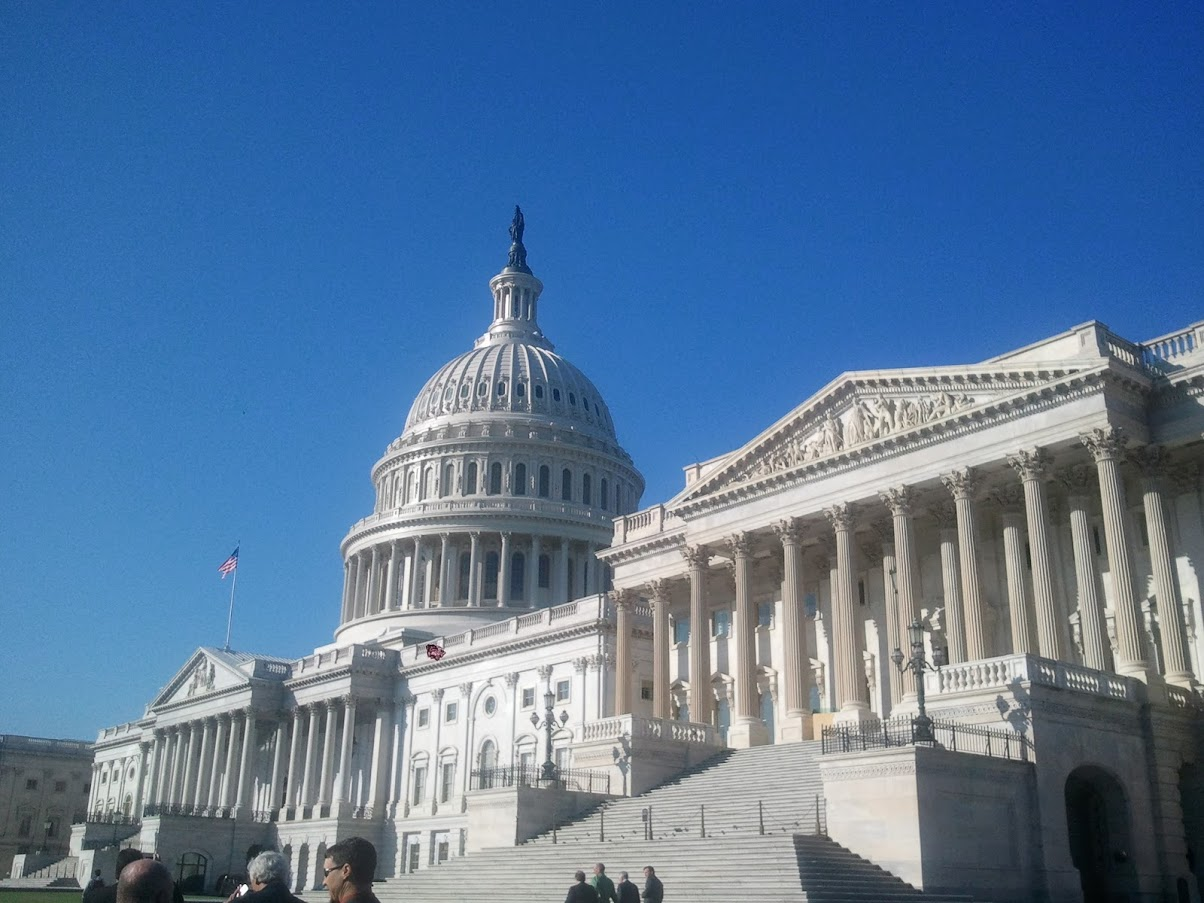
What about the House chambers? They couldn't handle that number of Representatives, right? Well, rarely are all members of the house in the chambers, but the capitol was specifically designed by George Washington with it's large dome with the intent that it would expand as needed. Temporarily, new members could be in the gallery if needed for the State of the Union and other major speeches. Other accommodations such as secured distance voting could also be allowed. 

The Benefits of Expanding the House

Restoring Proportional Representation
Increasing the number of seats would better align representation with population growth. A larger House would ensure that representatives are more directly accountable to their constituents and can advocate more effectively for their specific needs.

Improving Electoral Fairness
A bigger House would also lead to a fairer Electoral College. By redistributing electoral votes more equitably, presidential elections would more accurately reflect the will of the people.

Enhancing Diversity
A larger House would allow for a broader range of voices in government. More seats mean greater opportunities for candidates from underrepresented communities, leading to a Congress that better reflects the racial, ethnic, and socio-economic diversity of the U.S. population.

Reducing the Influence of Big Money in Politics
With smaller districts, the cost of running for office would decrease. Candidates could rely less on large donations and Super PACs, making elections more accessible to grassroots campaigns and ordinary citizens rather than corporate-backed candidates.
 

Sunday, November 8, 2020

Where do we go from here as a nation?

The 2020 election concluded when the last polls closed on November 3, 2020. In the following days, final vote tallies were completed, some states conducted recounts, and the process reached its conclusion. There is little doubt that the outcome—a Biden victory—will remain unchanged. The question now is: where do we go from here?

The past two decades have been among the most divisive in modern American history. Our nation bears deep wounds that must be healed, with divisions that have been exacerbated by increasing tribalism and partisanship. It is imperative that we learn from recent history and find a way to move forward together. The challenges ahead demand unity, and the way we have operated over the last twenty years cannot define the next decade.

As a lifelong registered Republican, my lack of support for Trump has never been a surprise to those who know me. There is a common misconception among Trump supporters that opposition to him stemmed solely from partisan loyalty. However, I did not vote for Clinton or Trump in 2016, fully aware that my preferred candidate would not take office in 2017. My opposition to Trump was not about party allegiance; it was rooted in disagreement with many of his policies and leadership style over the past four years. In the same way, I opposed Obama on numerous issues throughout his presidency, while also acknowledging his successes. Like anyone, I have personal biases against Trump, but I have also made a conscious effort to listen to his supporters, to understand their frustrations and aspirations. Many of them feel that their faith, their vision of America, and their political ideology have been under attack for the past twelve years.

At the same time, there is a misconception among many Democrats that Trump supporters are predominantly ignorant or racist, that they harbor hatred toward people of color and embrace bigotry. From my experience, this is simply not true. Many Trump supporters are compassionate, decent people in their everyday lives. Their support for Trump was based on a variety of reasons, and if we are to move forward as a nation, it is critical that we listen and seek to understand those reasons.

There are good people in both parties. What we must stop doing is labeling and dismissing each other. Instead, we should commit to listening more, engaging in thoughtful reflection, and striving to find common ground. I personally am making a commitment to listen and reflect more, and I hope that in the coming years, others will do the same. Reuniting as a country requires meaningful dialogue, especially with those we disagree with. We don’t have to agree on everything, but we should strive for compromise and progress. I hope this shift occurs not only in Washington but also in our own homes.

May God bless America.

Wednesday, February 19, 2020

Beyond Red and Blue: Breaking Free from Political Tribalism

Our country is deeply divided—on politics, religion, culture, and more. The divisions are growing, fueled by an “us vs. them” mentality that does more harm than good. Instead of seeking common ground, we often build walls between ourselves, seeing political opponents as enemies rather than fellow citizens with differing viewpoints.

One of the most frustrating aspects of this divide is the way arguments are framed. Straw man arguments dominate the conversation, reducing complex issues to oversimplified attacks.

For example, some people point to certain states to argue that one party is superior to the other. California (a blue state) has problems. Mississippi (a red state) has problems. Neither party controls an entire state from top to bottom, and no county in America votes 100% for one candidate. The reality is far more nuanced than "blue states bad" or "red states bad."

Likewise, labeling an idea as "left" or "right" doesn’t shut down the discussion—or at least, it shouldn’t. Policies should be judged on their merits, not on who proposes them. I agree with Bernie Sanders on campaign finance reform, but I also disagree with him on other issues. The same goes for Biden, Trump, Warren, Cruz, and Paul. No politician is right (or wrong) about everything. Even Sanders and Cruz have voted together at times.

Yet, we often reject ideas not because of what is said, but because of who said it. This is the essence of tribalism, or what I like to call “team sports politics.”

The Problem with Team Sports Politics

Think about a die-hard football fan. If you ask a New England Patriots fan whether Tom Brady cheated, they’ll likely deny it. But ask almost any other NFL fan, and they’ll say he absolutely did. Their judgment isn’t based on facts—it’s based on loyalty.

The same thing happens in politics. People dismiss or accept ideas based on party affiliation rather than evaluating them critically. Imagine taking a quote and presenting it as either from Bernie Sanders or Ted Cruz—the reaction would often depend more on the name than the content.

This kind of thinking creates blind spots. It prevents us from truly engaging with new ideas, from challenging our beliefs, and from growing as a nation.

Evaluating Ideas, Not Identities

If we want to move beyond tribalism, we must start evaluating policies and candidates based on substance, not party affiliation. It’s okay to disagree, but let’s base those disagreements on facts and principles rather than partisan loyalty.

Here are some of the most pressing issues in America today that deserve real discussion:

  • Immigration
  • Tax Reform (higher vs. lower taxes, loopholes, corporate taxes, etc.)
  • Healthcare (Medicare for All, Obamacare, full privatization, deregulation, etc.)
  • Spending & National Debt
  • Infrastructure
  • The Role of Government

Each of these issues affects all Americans, regardless of party affiliation. As we approach another election, it's more important than ever to research multiple perspectives, evaluate real data, and form independent opinions. If we do not have these discussions, how can we move forward as a nation? How will we ever see decreasing deficits ever again? 

A Warning from History

Even George Washington warned about the dangers of political factions. In his farewell address, he cautioned:

“The alternate domination of one faction over another, sharpened by the spirit of revenge... leads at length to a more formal and permanent despotism... The disorders and miseries which result gradually incline the minds of men to seek security and repose in the absolute power of an individual.”

Washington feared that partisan loyalty would eventually lead to tyranny, as people placed party allegiance above the good of the nation. More than two centuries later, we’re seeing just how prophetic his words were.

The Path Forward

If we ever hope to bridge the divide, it won’t come from shouting each other down. It will come from engaging with people, truly listening, and considering ideas outside our personal echo chambers.

It starts with trust—trusting that people on the other side of the aisle aren’t evil, but simply have different perspectives. It starts with humility—being willing to question our own beliefs. And it starts with respect—acknowledging that political opponents are still fellow Americans who care about the country, even if we disagree on how to improve it.

So as the next election approaches, I challenge you: Look at the facts. Seek out different perspectives. Engage in real conversations.

Because the future of this country depends on our ability to see each other not as enemies, but as fellow citizens.

Monday, September 9, 2019

Trump is not the best president ever. He's also not the worst.

Image Source Flickr CC license 
Something that bothers me with Trump supporters is the occasional claim that Trump is the best president we've ever had.
Many will argue over what achievements he's had and that is fine. It's common and understandable that supporters will give him more credit than those who oppose him.
Even if you think he's a great president, arguing that he's the best president ever is simply willful ignorance.

Lincoln, Washington, Adams, Jefferson, FDR and TR are often thought to be the best presidents in the history of our nation. In my opinion putting Trump above them isn't just laughable, it's willful ignorance.
What has Trump's biggest challenge been? A few matters in foreign affairs? Several large hurricanes (with a mixed record on recovery)? Nearly everything he's faced has been worse in the last 50 years at times, with equal or better records by the president's facing those challenges. The biggest point people push is that the economy is really good. But going from a good economy to a great, doesn't exactly make him the best president ever by far. 
Compare that with the five presidents mentioned, each of whom had lasting significant positive impacts on the history of the country.FDR for instance faced a much more difficult economy, a world war, and passed major legislation that still has impacts to this day. Lincoln faced a country at war, worked to unite the country with the transcontinental railroad and made sure economically those states who remained had a firepower economy. Washington built the government from the ground up, paid off the national debt, established initial ties with foreign countries, and helped keep the country united through the intial years of our country. 
Likewise, the belief that Trump (or Obama) is the worst president in history is also laughable. Buchanan is easily the worst, with his failure to compromise and push forward needed policies to shape the country in a way that it could move forward directly leading to the Civil War. Others that are worth noting, Harding who did very little and whose administration was riddled with fraud and scandals, Andrew Johnson who barely survived impeachment and who opposed reconstruction efforts, and of course Richard Nixon, who resigned in disgrace. Each of these men had major scandals, and divided the country in some of the worst ways. Now, Trump does have time that he could equal any of these men on either side possibly, but it isn't likely that he will. 

Monday, October 1, 2018

What did we learn from the Ford-Kavanaugh hearing?

Thirty years. Associate Justice Anthony Kennedy spent thirty years on the Supreme Court. In his final year on the court, the Supreme Court ruled on seventy five cases. Each of those cases will likely impact decades if not centuries of law in the United States.

As we consider seating Justice Kennedy's replacement, this past weekend has made many question how the Ford-Kavanaugh hearing impacts who the next Justice of the Supreme court will be. For most, there is little to debate about Dr. Ford's testimony. You likely either believe her or you do not. So that leaves Judge Kavanaugh's testimony. He began with an abrasive serious of barrages on the democrats on the committee and then continued during the questioning period to misdirect of refused answer many of the questions.

I have thought over the last few days about what I took from his testimony. I have heard a great number of people say how this was an "emotional response," that if I was falsely accused I might act the same way.

First off, I believe it's important to remember that we must hold Supreme Court nominees and justices to the highest standards. Not only because they are a lifetime appointment, but because their rulings can last centuries. We don't want justices making emotional decisions. We want justices with a superhuman knack for being focused on justice and the law. They need to be able to (as much as possible) set aside their own biases, their own experiences and focus on what is equitable, just and what is the law.

We don't want justices playing political games(as Kavanaugh did during that hearing). The supreme court must strive to be as anti-political as possible.

My last point is that this wasn't a spur of the moment emotional reaction as some seem to believe. This was a planned response to the power of Dr. Ford's testimony. This was the man who used to prep supreme court justices for the Bush administration. He made a calculated decision in his opening statement and his responses to questions. His statements had an intended response, to take the conversation away from how credible Dr. Ford sounded and whether or not her allegations might be true, to is this a political stunt by democrats. His point was to rally the troops of the GOP. It wasn't to say I'm innocent, it was to play into Graham/McConnell/Grassley's hands. He did not want the focus of his testimony to be picking apart the facts of the case, which is why he refused to answer so many of the questions.

If he wanted to say "I'm innocent" and I'm an open book willing to prove my innocence, you answer every question as clearly as you can. You are willing to submit to the FBI investigation without a second thought. That was not his desire.

That was not his response. His response was to try to allow the committee to do whatever they could to push his nomination through, by circling the GOP wagons around himself by attacking the "enemy."

Monday, January 23, 2017

Donald Trump Can't Make America Great Again

By The White House - whitehouse.gov, Public Domain
The election is over. Donald Trump has been sworn in as the President of the United States of America. Whatever you may think of him, if you are a U.S. citizen he is your president.

There is a hard road ahead of him. Our country faces many problems which will need his action. He will face economic, diplomatic, and military crises through the next four years. He will face opposition from democrats, republicans and the American people. No matter what he does he cannot, however make America great again.

He can help to make the American economy better. He can work to solve problems the American people face on domestic and foreign issues, but he cannot make America great. If we accept the claim that America once was great but it is no longer great, the cause is not economic problems, diplomatic, or dangers that we face from inside or without. We have always faced those problems in one form or another. Economies change, politics change, but if America is not great now and was before the only thing that I can say is that it is that we lack unity.

Why are we not united? Our politics and the media have hit the wedge between the limbs of our tree, but the true wedge that is splitting us in two is a lack of engagement. Our nation has split in two because we are no longer embracing social and civic interaction. We have begun to not trust each other. It is easier to stay at home and watch Netflix than it is to go and attend your city council meetings. Fewer Americans are becoming involved in our society, and so as a whole our society is struggling. When you only hear your own opinions, you are less likely to have them challenged. If what you watch, read and listen to confirms that, you are less likely to change wrong assumptions.

The longer this cycle goes, the more we begin to begin othering. Those "other" people are to blame. Those "left" or "right" wingers, our president, Congress, immigrants, other races, etc, are to blame. We stop seeking solutions that we ourselves can implement and withdraw into our echo chambers.

On the other hand when we are engaged we build stronger communities that can act, creating lasting change that can and will have a positive impact on the communities in which we live. In a book by Dr. Robert Putnam called "Bowling Alone: The Collapse and Revival of American Community," Dr. Putnam sites multiple studies that show that those who are engaged are more likely to be healthier, wealthier, and happier. They are less likely to commit crimes, and have stronger marriages. So not only will you make your communities and country better, but you will become a better person.

Trump cannot solve these problems. He cannot issue an order to make us all attend PTA, City Council or other civic meetings. He cannot make us become involved. So if you want to make America great again, get out of your comfort zone, perform an act of service, join a club, get involved in your cities, your neighborhoods, etc. Listen to someone with a different opinion and try to see things from their viewpoint. Seek to truly build unity by creating bonds across races, religions, genders, and political beliefs. If you truly want to make America great, it starts with you, not Donald Trump.

Thursday, October 13, 2016

Fact Check "Congressional Reform Act of 2012"


If you’ve come across claims that members of Congress receive full pay for life after just one term, know that this is a myth, not fact. It shows a fundamental misunderstanding of how congressional compensation and benefits actually work. Let’s set the record straight.

1. Congress Uses the Federal Employee Retirement System (FERS)

Members of Congress are part of FERS—the same retirement system used by postal workers, janitors, and other federal employees. They do not have lifetime tenure, as all members serve either 2-year (House) or 6-year (Senate) terms.

Additionally, congressional pensions have actually decreased in value over time. On average, pensions now pay about $30,000 less per year than they did previously.

2. No Pension Without Meeting Strict Requirements

Unless a member of Congress meets federal retirement eligibility requirements, they do not receive a pension. The requirements include:

  • Serving at least five years in Congress or another federal position.
  • Being of retirement age (62+ for a standard pension, or 50+ with 20 years of service).
  • Pensions are only a small percentage of their original salary.

3. Members of Congress Pay Into Social Security

Since 1984, all members of Congress have been required to pay into Social Security—just like any other working American.

4. Congress Pays Into FERS Like Other Federal Employees

Just like other federal employees, members of Congress contribute to FERS as part of their retirement plan. There’s no special loophole or exclusive congressional retirement system.

5. The Bigger Issue: Insider Trading, Not Salaries

While many argue about congressional pay, a more pressing concern is insider trading. Some members of Congress have access to information about upcoming legislation that could impact industries and markets, allowing them to make financially strategic investments.

In 2012, an attempt was made to pass stricter regulations, but the effort was ultimately blocked. This remains a more urgent issue than pension myths.

6. Congress Hasn’t Voted Themselves a Raise in Years

Despite common misconceptions, members of Congress haven’t voted to raise their salaries in quite some time. Their pay remains set unless adjusted through legislative action.

7. Congressional Healthcare: Federal Employee Plans

Most members of Congress participate in the same healthcare plans available to other federal employees. Some opt for private insurance, but there is no exclusive, taxpayer-funded healthcare plan for Congress alone.

8. No, Congress Isn’t Immune to Arrest

Another common myth is that members of Congress cannot be arrested. The only exception is outlined in the Constitution: they cannot be detained while traveling to or from the Capitol for a vote. This rule was created to prevent political manipulation—not to grant legal immunity.

9. What Contracts?

One particularly baffling claim suggests that members of Congress have some sort of secret contracts. In reality, there are no special contracts for Congress—just publicly available salary and benefits structures.

Bottom Line: Get the Facts, Not the Myths

The idea that Congress enjoys massive, unearned benefits is based on misinformation. While there are certainly areas for reform (such as insider trading laws), the viral claims about congressional pensions, pay, and privileges are simply not true.

Before sharing political claims, always check the facts. And if you want more political myths debunked, stick around—we’ve got plenty more to cover!