
What is USAID and What Does it Do?

As the nation prepares for another pivotal presidential election, the diverse backgrounds of the candidates on the stage offer a panorama of experiences, perspectives, and ideologies. In this blog post, we will delve into the backgrounds of prominent current presidential candidates, including former President Donald Trump and current President Joe Biden, as well as notable figures Chris Christie, Nikki Haley, Vivek Ramaswamy, Ron DeSantis, and Robert F. Kennedy Jr. Understanding the journeys and convictions of these individuals is crucial for voters seeking an informed perspective on the upcoming election.
Donald Trump: The 45th President of the United States, Donald Trump, emerged from a business background, real estate mogul and television personality. His unconventional approach to politics and emphasis on economic policies, hot button topics and America First vision defined his presidency. Elected in 2016, Trump's tenure left a lasting impact on the political landscape, contributing to ongoing debates on issues ranging from immigration to trade.
Joe Biden: Joe Biden, the 46th President of the United States, has dedicated much of his life to public service. Born in Scranton, Pennsylvania, Biden's long political career includes decades as a U.S. Senator from Delaware and service as Vice President under Barack Obama. His 2020 campaign focused on unity, healthcare, and social justice, and his presidency has been marked by efforts to address the COVID-19 pandemic and promote economic recovery.
Chris Christie: Former Governor of New Jersey, Chris Christie, has a background deeply rooted in law and governance. His career as a lawyer and U.S. Attorney for the District of New Jersey laid the foundation for his two terms as governor. Known for his direct approach to politics, Christie tackled fiscal issues, pension reform, and disaster response, earning both praise and criticism for his leadership style.
Nikki Haley: Nikki Haley, former Ambassador to the United Nations, brings a unique perspective to the political stage. Born in South Carolina to immigrant parents from India, Haley's political journey began after a successful career in business. As Governor of South Carolina, she gained national recognition for her response to the Charleston church shooting and has been an advocate for diplomacy and global engagement.
Vivek Ramaswamy: Entrepreneur and author Vivek Ramaswamy represents a new wave of voices entering the political arena. Known for his views on corporate culture, Ramaswamy challenges the role of corporations in societal matters. His entry into politics signals a growing trend of non-traditional candidates contributing diverse perspectives to the national discourse.
Ron DeSantis: Current Governor of Florida, Ron DeSantis, has a background rooted in military service and law. A Harvard Law School graduate and U.S. Navy officer, DeSantis served in Iraq before transitioning to politics. As governor, he has championed conservative policies, focusing on issues such as environmental conservation, education reform, and pandemic response.
Robert F. Kennedy Jr.: Robert F. Kennedy Jr., a member of the prominent Kennedy family, brings a legacy deeply intertwined with American politics. As a lawyer and environmental activist, Kennedy has been a prominent advocate for social and environmental justice. His work in vaccine safety and environmental causes reflects the ongoing commitment of the Kennedy family to societal issues.
The wide variety of backgrounds and experiences among these candidates and influential figures reflects the diversity inherent in American politics. As voters weigh their options in the upcoming election, understanding the multifaceted perspectives of these individuals becomes integral to making informed decisions that align with the nation's values and aspirations for the future.

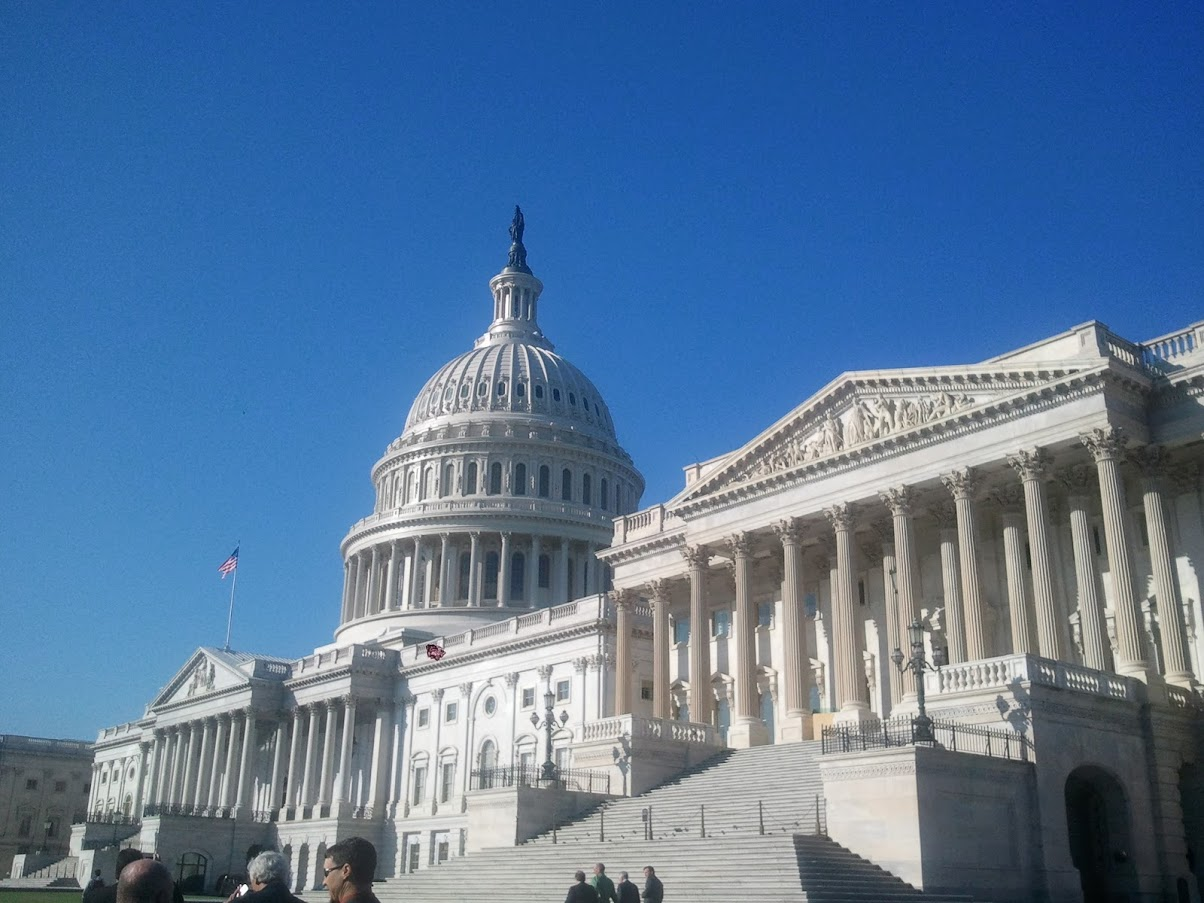

Our country is deeply divided—on politics, religion, culture, and more. The divisions are growing, fueled by an “us vs. them” mentality that does more harm than good. Instead of seeking common ground, we often build walls between ourselves, seeing political opponents as enemies rather than fellow citizens with differing viewpoints.
One of the most frustrating aspects of this divide is the way arguments are framed. Straw man arguments dominate the conversation, reducing complex issues to oversimplified attacks.
For example, some people point to certain states to argue that one party is superior to the other. California (a blue state) has problems. Mississippi (a red state) has problems. Neither party controls an entire state from top to bottom, and no county in America votes 100% for one candidate. The reality is far more nuanced than "blue states bad" or "red states bad."
Likewise, labeling an idea as "left" or "right" doesn’t shut down the discussion—or at least, it shouldn’t. Policies should be judged on their merits, not on who proposes them. I agree with Bernie Sanders on campaign finance reform, but I also disagree with him on other issues. The same goes for Biden, Trump, Warren, Cruz, and Paul. No politician is right (or wrong) about everything. Even Sanders and Cruz have voted together at times.
Yet, we often reject ideas not because of what is said, but because of who said it. This is the essence of tribalism, or what I like to call “team sports politics.”
Think about a die-hard football fan. If you ask a New England Patriots fan whether Tom Brady cheated, they’ll likely deny it. But ask almost any other NFL fan, and they’ll say he absolutely did. Their judgment isn’t based on facts—it’s based on loyalty.
The same thing happens in politics. People dismiss or accept ideas based on party affiliation rather than evaluating them critically. Imagine taking a quote and presenting it as either from Bernie Sanders or Ted Cruz—the reaction would often depend more on the name than the content.
This kind of thinking creates blind spots. It prevents us from truly engaging with new ideas, from challenging our beliefs, and from growing as a nation.
If we want to move beyond tribalism, we must start evaluating policies and candidates based on substance, not party affiliation. It’s okay to disagree, but let’s base those disagreements on facts and principles rather than partisan loyalty.
Here are some of the most pressing issues in America today that deserve real discussion:
Each of these issues affects all Americans, regardless of party affiliation. As we approach another election, it's more important than ever to research multiple perspectives, evaluate real data, and form independent opinions. If we do not have these discussions, how can we move forward as a nation? How will we ever see decreasing deficits ever again?
Even George Washington warned about the dangers of political factions. In his farewell address, he cautioned:
“The alternate domination of one faction over another, sharpened by the spirit of revenge... leads at length to a more formal and permanent despotism... The disorders and miseries which result gradually incline the minds of men to seek security and repose in the absolute power of an individual.”
Washington feared that partisan loyalty would eventually lead to tyranny, as people placed party allegiance above the good of the nation. More than two centuries later, we’re seeing just how prophetic his words were.
If we ever hope to bridge the divide, it won’t come from shouting each other down. It will come from engaging with people, truly listening, and considering ideas outside our personal echo chambers.
It starts with trust—trusting that people on the other side of the aisle aren’t evil, but simply have different perspectives. It starts with humility—being willing to question our own beliefs. And it starts with respect—acknowledging that political opponents are still fellow Americans who care about the country, even if we disagree on how to improve it.
So as the next election approaches, I challenge you: Look at the facts. Seek out different perspectives. Engage in real conversations.
Because the future of this country depends on our ability to see each other not as enemies, but as fellow citizens.
 |
| Image Source Flickr CC license |
 Thirty years. Associate Justice Anthony Kennedy spent thirty years on the Supreme Court. In his final year on the court, the Supreme Court ruled on seventy five cases. Each of those cases will likely impact decades if not centuries of law in the United States.
 |
| By The White House - whitehouse.gov, Public Domain |


